Five years ago, the Woodridge tornado swept through that community with a force that still surprises me when I see the photographs and after-action reports.
I wasn’t there that night, but as a career police chief who has overseen major disasters, I understand exactly what those first responders faced. Tornadoes don’t just destroy buildings; they shatter the sense of order people rely on. When the sun rises the next morning, the world seems rearranged in almost surreal ways.
Most citizens only see the surface of such a response. They observe police officers blocking roads, squad cars positioned across intersections, fire engines staged in groups, and ambulances waiting for assignments. To the untrained eye, it may seem like chaos without a clear pattern. However, nothing about a tornado response is improvised. There is a plan. There is a strategy. And a command structure activates within minutes.
The top priority is always life safety. This includes locating victims, rescuing those trapped, and creating safe passages for fire and EMS. Police officers immediately begin securing the most hazardous areas, such as downed power lines, gas leaks, collapsed structures, and debris fields that could shift and cause further collapse. Police are not just managing traffic; they are establishing the conditions that allow firefighters and medics to reach people in need.
Behind the scenes, a unified command post quickly forms. Police, fire, EMS, Public Works, and utility companies work together within a single coordinated structure. Fire manages search and rescue operations. EMS handles triage and transportation. Police secure the perimeter, protect responders, and control resource flow. Public Works provides heavy equipment, clears roads, and restores infrastructure. Everyone has a specific role because lives depend on clear communication.
Mutual aid becomes the backbone of the response. Woodridge did not face that tornado alone. Departments from across the region arrived to help police officers from towns miles away, fire engines, and ambulances from districts most residents had never heard of. Mutual aid is not a courtesy; it is a necessity.
No single agency has the manpower to handle a disaster of that magnitude. When the call goes out, other departments respond because they know the next time, it might be their community under the funnel cloud.
But the story of Woodridge isn’t just about first responders. It also highlights the citizens who stepped up during those crucial early hours. Neighbors checked on each other before responders could reach every home. People used flashlights to help crews navigate dark streets. Residents with chainsaws started clearing driveways and sidewalks so emergency vehicles could pass. Families opened their doors to displaced neighbors. Ordinary citizens became force multipliers, and their actions saved lives by saving time. Time saves lives.
In the days that followed, the police role shifted. Officers transitioned from rescue to recovery efforts. They secured damaged neighborhoods to prevent looting and escorted utility crews into dangerous areas. They collaborated with Public Works to reopen streets and restore order.
They helped families return to what was left of their homes, often walking with them through the debris that had once been their lives. They coordinated with the Red Cross, local shelters, and hospitals to ensure displaced residents had somewhere to go. They remained visible because, in moments like that, a community needs to see its police officers standing with them.
People often wonder how first responders stay grounded during incidents like this. The truth is that they don’t have the luxury of processing emotion in the moment. They compartmentalize. They focus on the next task, the next victim, the next hazard. They rely on training and on the people beside them. They lean on the command structure because it gives them purpose when everything around them seems broken.
But once the scene stabilizes, the last victim is transported, the final gas leak is shut off, and the families are accounted for, that’s when the weight hits. That’s when the images settle in. That’s when first responders lean on each other, engage in peer support, debrief, and have quiet conversations in the parking lot. You don’t forget what you saw, but you learn to carry it.
Five years later, Woodridge is rebuilt. Stronger. More resilient. But anniversaries like this are not just about recalling the destruction. They are about honoring those who responded. The firefighters who crawled through collapsed homes, the medics who treated victims in the dark, the police officers who secured the scene and coordinated the response, the Public Works crews who worked through the night, and the citizens who stepped up when their community needed them most.
A tornado may destroy buildings, but it also demonstrates a community’s resilience. Woodridge proved that night, and in the days after, that its backbone remains unbreakable.
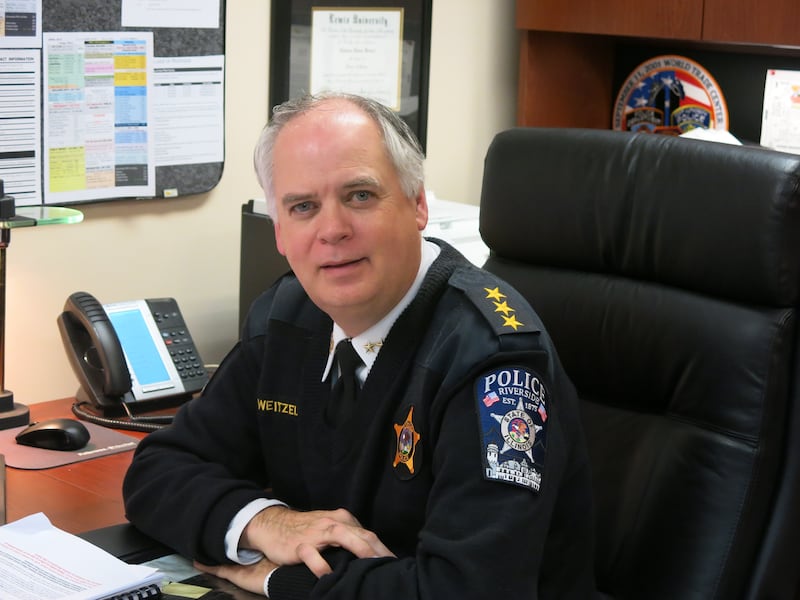
• Tom Weitzel is the former chief of the Riverside Police Department and spent 37 years in law enforcement. He can be reached at tqweitzel@outlook.com. Follow him on X at @chiefweitzel or TikTok at tiktok.com/@chiefweitzel.