Domestic violence always has been one of the most difficult crimes for law enforcement to prevent, investigate and prosecute.
After nearly four decades in policing, I can say without hesitation that domestic violence calls were among the most dangerous and emotionally complex situations my officers faced. Today, the problem is not only persistent, it is getting worse, both in Illinois and across the country.
In Illinois, the numbers are staggering. The Illinois Domestic Violence Homicide Report shows that in 2023, our state saw 94 domestic violence incidents resulting in 120 deaths, compared to 57 deaths the year before – a 110% increase. That is not a statistical fluctuation. That is a crisis.
At the same time, domestic violence service providers report overwhelming demand partly because resources aren’t available.
Statewide, agencies provided more than 621,000 direct service hours to more than 52,000 survivors in fiscal 2025. These numbers tell a painful truth: domestic violence is not declining. It is escalating in severity, frequency and lethality.
Domestic violence is uniquely difficult to reduce because it happens behind closed doors, where victims often fear retaliation, financial instability, losing their children or not being believed. Abusers rely on that silence.
The violence also escalates quickly and unpredictably. Offenders may be intoxicated, emotionally unstable or armed. Officers walk into volatile situations where victims are terrified and children often are present.
Firearms have made these incidents far more lethal, and Illinois’ homicide data shows a sharp rise in domestic violence deaths involving guns, mirroring national trends.
The system itself is overwhelmed. When nearly a thousand service requests go unmet in a single day, it means victims are being turned away at the moment they need help most. Economic stress, housing instability and mental health strain all have contributed to rising violence.
As a former chief, I believe law enforcement has a critical role in reducing domestic violence. We cannot solve it alone, but we can make a measurable difference. Police must treat every domestic violence call as high risk because these calls are among the most dangerous for officers nationwide. Training must reflect that reality.
Investigative follow through must be stronger. A domestic violence case doesn’t end when the scene is cleared. Officers should document injuries, photograph the scene, collect digital evidence, conduct followup interviews and coordinate early with prosecutors. A strong case file can be the difference between an offender walking free or being held accountable.
We also need to be honest about accountability. In my view, if we are serious about protecting victims, then every domestic battery arrest should be charged as a felony, not a misdemeanor.
Domestic violence is not a minor offense. It is a violent crime with a clear pattern of escalation. Treating it as a felony would send a message that the state takes these crimes seriously, and it would give prosecutors and judges the tools they need to intervene before the violence turns deadly.
Along with that, offenders should be held in custody, not immediately released back into the same home where the violence occurred. Releasing an abuser within hours of an arrest puts victims at extreme risk and undermines the entire purpose of the intervention. If we want to get serious about domestic violence, then we must stop treating it like a low-level offense.
Leadership matters. Police chiefs must make domestic violence a top priority of their departments. If a chiefs fail to do so, then we all fail. Chiefs set the tone, allocate the resources and determine whether domestic violence is treated as a core public safety mission or an afterthought.
When leadership minimizes the issue, the entire system follows. I don’t say this lightly. I serve on two statewide domestic violence committees in Illinois. I see firsthand how policy decisions, leadership engagement and departmental priorities directly affect victim safety and offender accountability. When chiefs lead on this issue, progress happens. When they don’t, the system collapses around the victims who need it most.
Victims often ask what they can do to help the police, and I always answer carefully, because the responsibility for safety should never fall solely on the person being abused. Still, there are steps that can make a real difference when victims feel safe enough to take them.
When possible, victims should call 911 immediately when violence occurs or when threats escalate. Early reporting gives officers a chance to intervene before the situation becomes deadly.
Providing officers with as much detail as possible – past incidents, threats, injuries, weapons in the home and any history of escalating behavior – helps us build a stronger case and understand the level of danger.
Saving text messages, voicemails, photographs of injuries or any digital evidence can be critical. If a protective order is in place, victims should report every violation, no matter how small it may seem. Violations often are the clearest warning signs of escalating violence.
And when officers arrive, victims should try to be honest about what happened, even when fear or shame makes that incredibly difficult. Officers cannot protect what they do not know.
But victims cannot do this alone, and they should not be expected to. Police have an equally important responsibility to help victims in ways that are consistent, compassionate and effective. Officers must listen without judgment, document everything thoroughly and treat every domestic violence call as a high-risk situation. We must slow down, ask the right questions and look for signs of coercive control, not just physical injury.
Officers should help victims create immediate safety plans – identifying safe exits, securing important documents, arranging for children’s safety and connecting them with advocates or shelters. Police must enforce protective orders aggressively and take every violation seriously.
Followup is essential. A domestic violence case does not end when the squad car leaves the driveway. Officers should check back with victims, coordinate with prosecutors and ensure that evidence is forwarded promptly so charges can move forward.
Most important, police must treat victims with dignity. A victim who feels dismissed or disrespected is far less likely to call again, and that silence can be deadly.
Domestic violence is one of the most dangerous calls an officer can face. It is unpredictable, emotionally charged and often involves weapons. Officers walk into situations where victims are terrified, offenders are desperate and children are caught in the middle.
When domestic violence homicides double in a single year, that is not a blip, it is a warning. Illinois cannot continue down a path where victims are left unprotected and offenders face fewer consequences. The data is screaming at us.
Domestic violence is not inevitable. It is preventable, but only if we confront it with urgency, resources and a justice system that prioritizes victim safety over political ideology.
Every domestic violence homicide is a failure somewhere in the system. We owe victims more than awareness campaigns. We owe them protection, accountability and a coordinated response that recognizes the gravity of the threat they face.
Illinois’ numbers should serve as a national wakeup call. Domestic violence is rising. It is becoming more lethal. And unless we act decisively, the next report will be even worse.
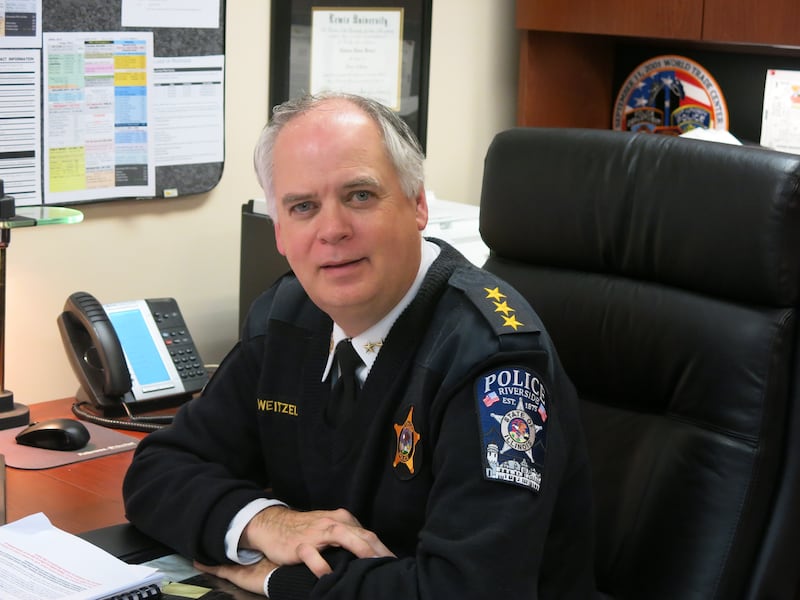
• Tom Weitzel is the former chief of the Riverside Police Department and spent 37 years in law enforcement. He can be reached at tqweitzel@outlook.com. Follow him on X at @chiefweitzel or TikTok at tiktok.com/@chiefweitzel.