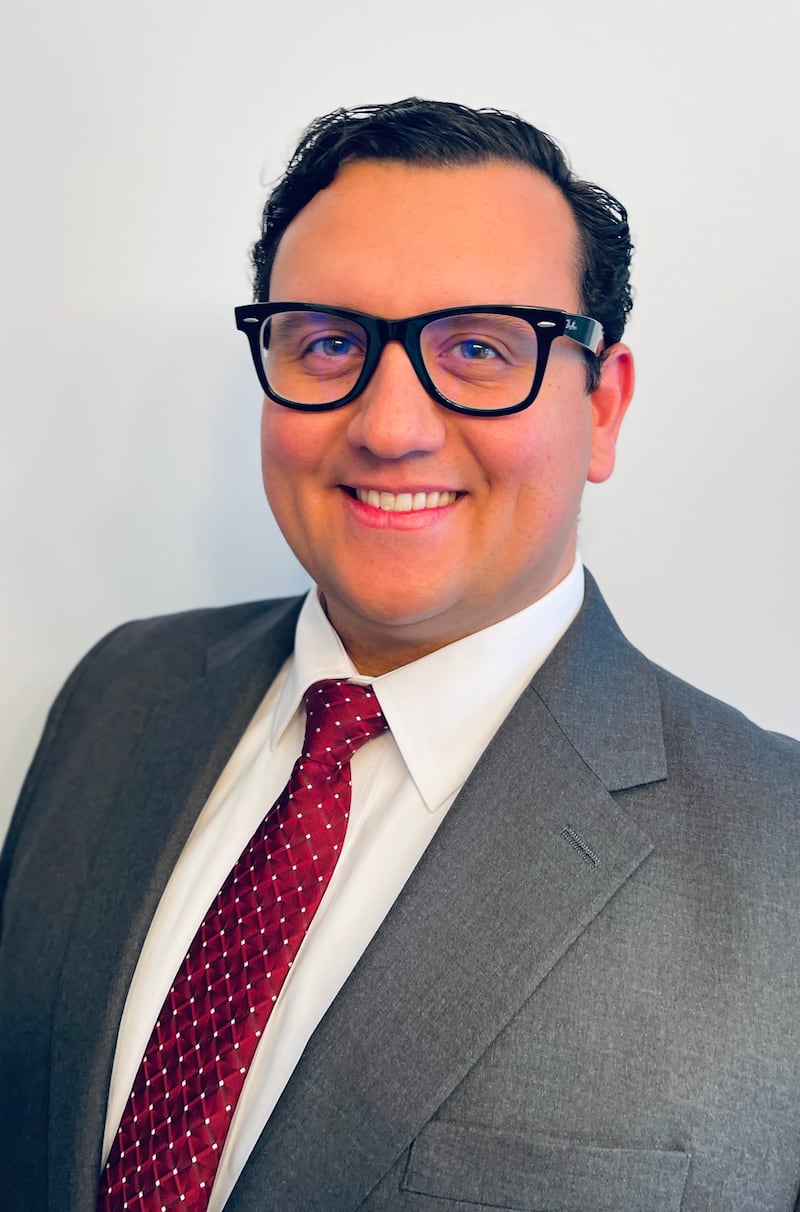
Name: Nicolas Jimenez
What office are you seeking: Kane County Board District 13
What is your political party? The candidate did not answer
What is your current age? 34
Occupation and employer: Quality Manager Ferrara
What offices, if any, have you previously held? Precinct Committeeman: CA-01, GE-04
City: Geneva
Campaign website: www.facebook.com/VoteNicoforKane
Education: B.S. Food Science and Human Nutrition, University of Illinois Urbana-Champaign
Community involvement: The candidate did not answer
Marital status/Immediate family: Married, 3 children
What are your top three priorities for this district?
Life in Kane County is becoming harder for families who work, care for children, and try to make ends meet. Housing costs are climbing faster than wages, and too many families live one paycheck away from losing the homes they’ve built. My first priority is ensuring housing stability and affordability, using every tool the county has from zoning and land trusts to partnerships and tenant protections to prevent displacement. Housing is not just property; it’s the foundation of a life, a community, and a future for our kids. Second, I will strengthen public services that respond to crises. Mental health care, substance use treatment, and public health programs must function as lifelines, preventing emergency rooms and jails from becoming default systems of care. Finally, fiscal responsibility must center on people, not appearances. Budgets should focus on outcomes, cutting waste while preserving programs that protect families, keep people employed, and prevent harm. This approach ensures that residents see real improvements in their lives, with support when they need it most and county resources used effectively.
Should the County Board regulate short-term rentals? If so, what regulations would you want to see?
Short-term rentals are reshaping neighborhoods, removing housing from long-term residents, and driving up rents. The county must act where local jurisdictions haven’t, requiring every short-term rental to register annually, meet strict occupancy and safety standards, and maintain a local contact for neighbors. In areas where housing is already under pressure, rentals should be limited or restricted entirely. Consistent enforcement and regular audits will protect housing stock, stabilize rents, and keep neighborhoods livable, ensuring families can stay in the communities they call home.
How would you like to see the former Fabyan Parkway jail site redeveloped? Should all or part of the property be sold?
The former jail site presents a rare opportunity to turn a symbol of incarceration into a hub for community support. The site should prioritize programs like behavioral health services, reentry and workforce development, and housing linked to these supports. Some parcels could be leased or sold for complementary development, but Kane County must retain control of the core land to guarantee that community needs drive the project. Strategic leasing, partnerships with nonprofits, and careful county oversight, will transform the sit into housing, job training, and mental health services by turning a former symbol of confinement into a place of opportunity and healing for generations.
Last year, the board was divided on a “We Stand Against Hate Week” proclamation. What is your view on it?
Hate does not appear out of nowhere, and silence allows it to grow. Kane County must declare unequivocally that harassment and discrimination have no place in our communities. Proclamations alone are not enough; they must be paired with concrete protections and funded programs that educate residents, prevent harm, and ensure access to services for everyone. By combining clear messaging with practical action, the county signals that it stands on the side of residents who are most vulnerable, creating safer, more inclusive communities for all.
The Kane County Board has limited federal immigration enforcement on county property. Do you support that move? Do you support the Illinois TRUST Act more broadly and what, if any, reforms to it would you like to see?
Local government should be a place of safety and trust, where residents can access services without fear. Limiting federal immigration enforcement on county property helps families seek care, report crimes, and participate in their communities confidently. I support the Illinois TRUST Act and any clarifications that strengthen protections without expanding enforcement. Codifying these policies and training staff ensures protections are applied consistently, building trust between residents and government. Families can feel safe, communities remain cohesive, and the Kane County avoids the social and economic harm that fear and mistrust bring.
The county board is expected to have another tight budget season this year. Looking ahead, if you must decide between raising the property tax levy or cutting programs, what would your choice be? What specific areas of spending would you prioritize cutting? How much further are you willing to dip into reserve funds to avoid program cuts?
Every budget decision affects real people. Cutting programs that prevent homelessness, support mental health, or help working families may balance the books on paper, but it increases costs in emergency rooms, jails, and schools. Where possible, I would pursue modest, progressive revenue adjustments before cutting critical services, while eliminating waste, duplicative contracts, or nonessential capital projects. Reserves exist to protect residents in times of crisis, not to mask structural shortfalls. Targeting resources towards programs that truly prevent harm, we can maintain services that protect families, promote stability, and ensure county finances remain sustainable.
Do you support the diversion of RTA revenue from transportation to public safety?
Transportation is essential for families to reach work, school, and services, and diverting RTA funds to public safety would weaken mobility and economic stability. At the same time, raising new revenue is only acceptable if it is transparent, voter-approved, and clearly tied to services that residents need. By using referendums or targeted funding measures, the county can strengthen public safety while maintaining roads and transit. This approach keeps families moving, supports economic opportunity, and ensures that emergency services are fully funded without compromising fairness or community priorities.
Along those lines, are you willing to consider other new revenue sources like asking voters again to approve a countywide safes tax increase or increasing the motor fuel tax?
Raising revenue is only acceptable when it is transparent, accountable, and directly tied to services that residents rely on. Countywide measures, like a sales tax increase, should be narrowly targeted, time-limited, and clearly dedicated to programs that protect families, support housing stability, and strengthen public services. In contrast, increases like the motor fuel tax can disproportionately affect working families, so any approach must consider fairness and impact. Using voter-approved, carefully structured revenue tools allows the county to maintain critical services, keep neighborhoods safe, and ensure families see tangible benefits from their contributions.
One financial stressor is the end of COVID-19 relief dollars. What should the county do with programs funded by federal COVID-19 dollars?
Federal COVID-19 funding sustained critical programs, but those dollars were temporary. Programs that prevent homelessness, reduce jail populations, and strengthen health systems must continue wherever possible, funded through sustainable county resources or progressive revenue tools. Programs that cannot be maintained should be responsibly phased out with clear communication to the community. Focusing resources on essential programs ensures vulnerable residents continue to receive support, public health is protected, and Kane County can sustain services responsibly once federal funding ends.
What is your stance on solar energy facilities or data centers on agricultural land? Does the risk of lawsuits factor into your stance? What about battery storage?
Renewable energy is essential, but it cannot come at the expense of farmland, water quality, or communities. Kane County should prioritize brownfields, rooftops, and already-developed land for solar, battery storage, and data centers. Agricultural land may only be used if projects meet strict zoning, environmental protections, size limits, and decommissioning plans. Careful design and strict enforcement of these standards allow Kane County to pursue clean energy, protect farmland, and minimize risk of lawsuits, while delivering projects that benefit the community and the environment for the long term.