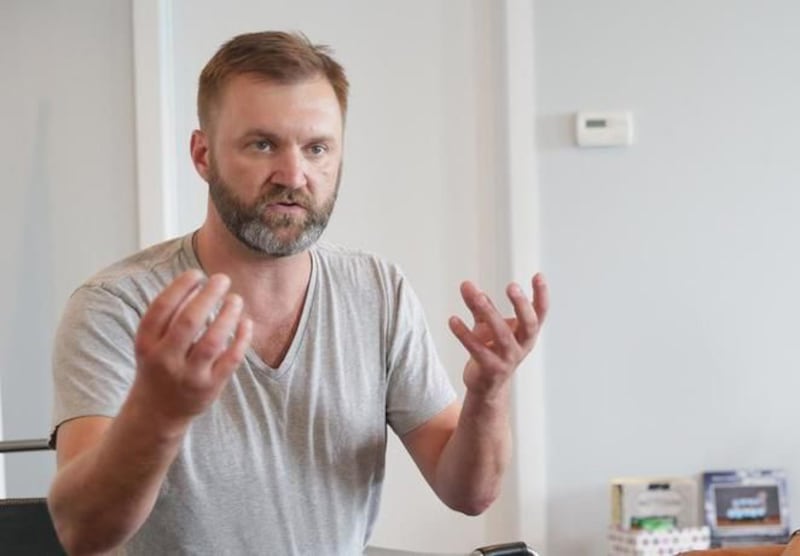
For the Perfectly Flawed Foundation’s founder, Luke Tomsha, helping those fighting drug addiction starts with two key ideas: stigma kills, and to meet people where they are.
Shaped by his own experience battling a heroin addiction, Tomsha has built a support system for those shaped by his own experience.
Based in downtown La Salle, the nonprofit leads regional efforts in substance use prevention and recovery support. From its mobile wellness unit to a new machine that tests street drugs’ chemical makeup, the foundation is changing how communities approach addiction.
He struggled with heroin use for more than a decade, a period he said exposed him to support systems that often failed.
“Traditional treatment demands abstinence from the start – ‘it’s to stop using drugs and alcohol, and then we’ll help you.’ To me, that’s backward.”
During that time, Tomsha said he often found himself in environments that felt restrictive or judgmental, rather than supportive.
“Recovery spaces can be very exclusionary,” he said. “There was never a space for people who didn’t fit that all-or-nothing model. People are afraid to seek help because of how they’re treated, and I saw that firsthand.”
Tomsha said his experience gave him a unique perspective, allowing him to rethink traditional approaches to recovery.
After he stopped using heroin in 2015, he began sharing his story publicly – first through writing about his experiences, then by raising money to help others access alternative forms of support.
“I started this work and came forward with my story to reduce stigma,” Tomsha said. “I wanted to be a part of creating an environment where people feel comfortable coming forward with their struggles.”
This approach involves two concepts: stigma kills and meeting people where they are.
Through programs such as mobile outreach and harm reduction services, Perfectly Flawed works to ensure people have access to basic resources and support, regardless of their situation.
“There can be a lot of weight in this work,” he said. “You’re dealing with a lot of sadness, but you also know you’re in a position to make a difference.”
Despite those challenges, Tomsha said his focus remains on helping people find stability and purpose in life.
“I think it’s about helping shift people’s mindset,” he said. “We all have strengths. It’s about finding what brings you joy and pursuing that.”
Looking ahead, Tomsha said he hopes to continue expanding education and awareness efforts, particularly around addiction and public policy.
“There’s so much misinformation out there,” he said. “If we can educate people and change perspectives, we can make a real impact.”