Nearly everything I ate when I was a kid came from a cast-iron pan. Fried potatoes and onions, cooked in bacon fat, were a standout among those memories. For decades, I tried to duplicate Grandma's fried potatoes and never could get it just right. About the same time I decided it was eating them in her kitchen that made the difference, I made another discovery, well, two discoveries.
I put some potatoes in the fridge for keeping while we were on vacation. When we came home, I fried them with onions as usual, but this time, two things were different. The first was that I had picked up a beautifully seasoned cast-iron skillet at an outdoor antiques show. It was as smooth as glass and very old, a Griswold pan. It was the first cast-iron pan I owned.
The second thing that had changed is worth mentioning, too. Resting in the fridge for a week had allowed some of the starches in the potatoes to turn to sugars, making the potatoes slightly sweet. And that made them taste like Grandma's. She always had stored her potatoes in an unheated room in the basement that once had been our coal cellar. The cold had apparently made hers taste sweeter, too.
At first, I used my cast-iron skillet only for frying and baking cornbread and pineapple upside down cake. But over the years, I have expanded my repertoire to include things you don't usually think of as cast-iron dishes. It takes a while to understand cast iron and the quirks that make it special. There were some burnt meals along the way.
The first thing I learned was to buy one of those silicone handle covers so I would stop burning myself every time I forgot and picked up the pan by the hot handle. That began my understanding of the way cast iron retains heat — which is to say very well and for a very long time. It is not uncommon for me to turn the heat off completely and finish a dish on retained heat.
That retained heat can be difficult to get used to managing. When searing a steak, for example, you start on high, but after one side is seared, it is necessary to turn it down to medium to keep from scorching the meat after it is seared. I once dramatically overcooked chicken cutlets by leaving them in the pan after they were finished. You will learn to adjust the heat, but unless you are searing, it's better to always start out on medium.
Contrary to popular belief, cast iron does stick. Even a perfectly seasoned pan will not allow things such as eggs and potatoes to slide off the pan like you might experience with your nonstick pans. But when the pan is seasoned, and you use plenty of fat, fried foods will be manageable and things such as cornbread will actually turn out of the pan easily.
Protecting that seasoning, which really is a layer of polymerized fat, is easier than many dire warnings would have you think. You can, and should, wash the pan with soapy water. A well-used and seasoned pan will not be impaired by proper washing. I was initially reluctant to cook anything acidic in my cast iron because of the possibility of ruining the seasoning or even corrosion. And I still wouldn't use it to simmer tomato sauce all day. But I do use wine and vinegar to deglaze in it and have had no problems.
One thing that can soften and loosen the seasoning is allowing the pan to sit in water for a long time. This is something you shouldn't do. If a pan gets so crusty you can't wash it easily, use steel wool to scrub it clean and then reseason it.
There are a lot of cast-iron products out there, some more useful than others. I have found my 8-inch skillet, 12-inch skillet and cast-iron griddle to be the pans I get the most use from. The griddle covers two burners on my stove and has a grilling side for steaks and a smooth side for pancakes or potatoes. It is very heavy, and I keep it handy in the stove drawer. I have a cast-iron wok and a set of four cast-iron serving dishes that I have never used. Bill does use our two deep, covered pots for camping.
CAST-IRON PAELLA FOR TWO
4 boneless, skinless chicken thighs, cut into chunks
2 teaspoons smoked sweet paprika
Salt and pepper
1/2 tube chorizo
1 tablespoon olive oil
1/3 sweet onion
3 cloves garlic
Handful fresh parsley, chopped
1 can diced tomatoes, with juice
3 1/2 cups chicken broth
3/4 cup short grain rice
Pinch of saffron
Rub the paprika, salt and pepper into the chicken and set aside. Cook the chorizo in the olive oil, chopping it until it is fine. Remove the cooked chorizo to a plate, leaving the oils in the pan. Cook the chicken in the oils until almost done, and remove to the plate, again leaving the oils and juices. Over medium heat, saute the onions, garlic and parsley until caramelized. Add the tomatoes and simmer until they are thick and most of the juices have cooked off.
Add the rice and saute for 2 minutes in the tomato sauce. Start adding the broth, one cup at first, and add the saffron. After 5 minutes, add more broth. Place the chicken and chorizo back into the pan. Stir, scraping the bottom of the pan every few minutes.
Preheat the oven to 400 degrees. When the rice is cooked and the dish starts to thicken, place the skillet in the oven and let it bake until a dark, caramelized edge forms. This took 25 minutes for me. Serve hot.
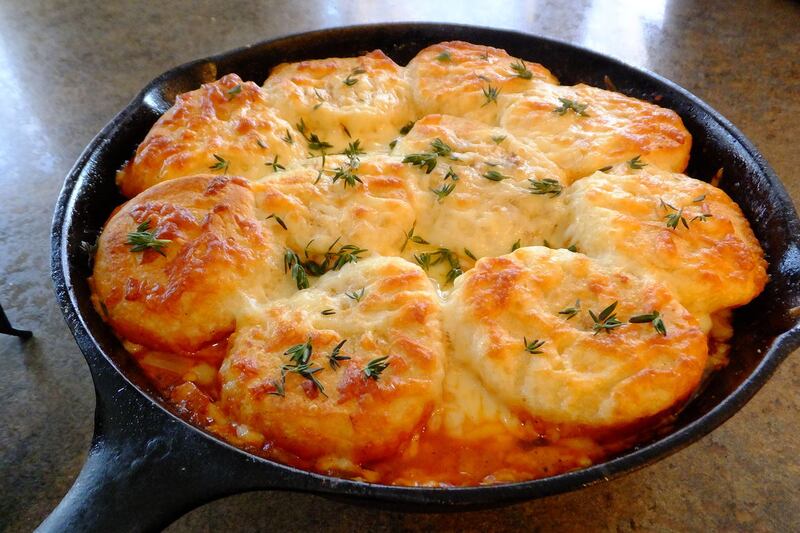
CHILI BISCUIT BAKE
1 pound ground chuck
1/2 red bell pepper, chopped
1/2 onion, chopped
1 small can fire-roasted chilies
1 teaspoon cumin
3 teaspoons chili powder
Salt and pepper
1 (15-ounce) can crushed tomatoes
8 ounces chunk enchilada cheese, shredded
1 can regular biscuits
Preheat the oven to 400 degrees. In a large cast-iron skillet, crumble the ground beef, salt and pepper well and add the peppers, onions and chilies. Cook the meat mixture on the stovetop, chopping it to make it evenly crumbled. Drain off the liquid, reserving a quarter cup. Add the tomatoes, stir well and check the seasonings, adding more if needed. Simmer for 5 minutes and turn off stovetop.
Place one-third of the shredded cheese over the mixture. Place the biscuits over the top and press them down lightly. Cover with the remaining cheese and spoon some of the reserved liquid over the top of each biscuit. Bake for 20 minutes until bubbling and golden-browned.
You can find a cast-iron pot dealer at most big antique shows, where you will pay top dollar for them. My 8-inch Griswold cost me $60. Some of these dealers now are using electrolysis to clean up old pans, so the cost is justified. If you get lucky, you might find one at a garage or estate sale for less. The best bargains are the sad, neglected pans that are perfectly good under all the grime and rust. But is it better to buy old pans?
The new pans are made differently. They are thicker and heavier, but with less density of the metal. The old pans were machine-tooled to polish the pebbled surface, but that is an expensive process, so to keep costs down, the new pots are left pebbled. They still can be seasoned, but they will never wear down to that smooth, glassy finish.
I have used both and, in my opinion, it is better to seek out an old pan. You can sometimes find them on Craigslist or eBay, as well as antique shows and flea markets. They make excellent wedding gifts; just remember to see that they set flat and aren’t cracked. Don’t get too hung up on brand names. Griswold is wonderful because it is lighter in weight, but Wagner made good pans, too, and both companies produced pans that have no logo or markings on the underside.
<strong>TO RESEASON: </strong>
To season or reseason a cast-iron pan, wash and dry it thoroughly. Coat the entire inside and outside of the pan lightly with a pure fat. (Lard, bacon fat, olive oil or seed oils will do nicely.) Seasoning the outside guards against rust. Place the pan in a preheated, 250-degree oven and leave it for 15 minutes. Turn the oven off and let it cool in the oven.
<a href="http://ngage3.daily-journal.com/stories/show_queue?search%5Bsection_id_eq%5D=23&search%5Bsqueue_id_eq%5D=7&updated_story=304332&updated_story=304323&updated_story=304329"><img title="Back" src="http://ngage3.daily-journal.com/images/back.gif" border="0" /></a> <a href="http://ngage3.daily-journal.com/stories/304323.txt?save=1"><img title="Save as .txt" src="http://ngage3.daily-journal.com/images/text.png" border="0" /></a> <a href="http://ngage3.daily-journal.com/stories/304323/edit"><img title="Edit" src="http://ngage3.daily-journal.com/images/edit.gif" border="0" /></a> <a href="http://ngage3.daily-journal.com/cloneit/304323"><img title="Clone Story As New" src="http://ngage3.daily-journal.com/images/clone.png" border="0" /></a> <a href="http://ngage3.daily-journal.com/stories/audit?id=304323"><img title="View Audit Trail" src="http://ngage3.daily-journal.com/images/audit.png" border="0" /></a> <a href="http://ngage3.daily-journal.com/stories/304323.ind3"><img title="Save for InDesign" src="http://ngage3.daily-journal.com/images/xml.png" border="0" /></a> <a href="http://ngage3.daily-journal.com/stories/304323.ind2"><img title="Save for InDesign with agate styles" src="http://ngage3.daily-journal.com/images/ag.png?1385074186" alt="Ag" /></a> <a href="http://ngage3.daily-journal.com/stories/advanced_copy_prompt?id=304323"><img title="Repost Story To Website" src="http://ngage3.daily-journal.com/images/repost.png" border="0" /></a> <a href="http://daily-journal.com/article_586a4314-5cfe-5aa8-a48a-a74dd4fb15d4.html" target="new"><img title="View story on the website" src="http://ngage3.daily-journal.com/images/viewonline.png" border="0" /></a>