The Chicago Bears’ six-year search for a new stadium will likely reach its conclusion in the coming months.
Both team owner and chairman George McCaskey and president and CEO Kevin Warren said Wednesday they’d like to have the legislative process wrapped up over the next few months so they can make a final decision. The team’s goal is to open the new stadium in 2030.
“If we can get this wrapped up by late spring, early summer, then we have to finish the design, because we want to make sure it’s kind of site-specific,” Warren told Shaw Local News Network in Phoenix on Wednesday at the end of the NFL’s annual meetings. “The goal is to do everything we can to be open in 2030.”
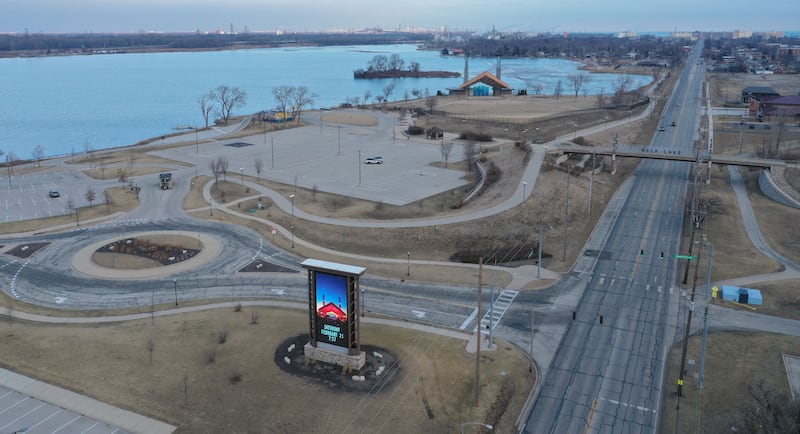
The Bears will decide whether to leave Soldier Field on Chicago’s lakefront for a 326-acre property they own in Arlington Heights or a 340-acre property in Hammond, Indiana, that’s next to Wolf Lake. But they’re still waiting to see what the legislative options will actually look like.
Indiana acted quickly after Warren opened up the team’s stadium search to include Northwest Indiana in December. Indiana lawmakers passed and signed a bill into law in February to incentivize the Bears to move to Hammond just over the Illinois-Indiana border.
Illinois lawmakers are working on a megaprojects bill that would allow major companies like the Bears to negotiate their property tax rate with local governments. The franchise is also working out how much the state would pay for infrastructure upgrades surrounding the Arlington Heights property.
An Illinois House committee passed legislation in February that would allow the Bears to do that. But lawmakers continue to negotiate the final details before putting it up for a full House vote.
The Bears are hoping for a decision on whether that legislation will pass by the time the Illinois legislature adjourns at the end of May.
“I think the biggest thing is, in all these big projects, you have to have tax certainty, which is critically important,” Warren said. “We would not be able to build a stadium without tax certainty. Fortunately, we do have tax certainty in the state of Indiana, from that standpoint. There are no property tax taxes for our stadium in the state of Indiana, so that is certain. That legislation has passed. But here in Illinois, for us to even consider an opportunity, we have to have tax certainty. Without that, we can’t proceed forward.”
The Bears won’t pay off the remaining bonds for the renovations of Soldier Field to earn support from Chicago-area lawmakers, however.
Some lawmakers have suggested the Bears should pay the city back for the stadium’s 2003 renovations. They’ve pointed to how the Cleveland Browns did it in their $100-million settlement with the city of Cleveland when they chose to build their new stadium in the suburbs.
Warren wasn’t open to the idea. He said the Bears will pay the rest of their lease should they break it before its 2033 expiration. But in Warren’s view, the Bears have done everything that’s been required of them.
“We’ve paid our portion,” Warren said. “I think if you talk to the political leaders who really understand that, we’ve paid our portion of that. So we’ve done what we’re supposed to do from that standpoint. We will honor the lease, right? We will definitely do that. We’ll never walk away from honoring the lease. But as far as [Illinois Sports Facility Authority] dollars, we’ve paid that portion.”
:quality(70)/cloudfront-us-east-1.images.arcpublishing.com/shawmedia/BZK22LBQVVB3ZEH65PLJ7HAVFA.png)
Even if Illinois does pass the legislation, Warren didn’t say it was a sure thing that the Bears would move to Arlington Heights.
The team is looking for funding to help support the infrastructure surrounding the former Arlington Park site. Indiana has already created a plan to build up the infrastructure in Hammond. Illinois Gov. JB Pritzker has been open to infrastructure support during negotiations.
“You need to make sure these projects, you can finance them,” Warren said. “One of the biggest focal points now is to check on the capital markets, the financial markets. So PILOT legislation is a critical component of it. That’s only one step. Then you have to deal with the infrastructure on any of these stadiums – the roads, the highways, the sewers, the storm water, all those things have to be a focal point to be able to build and operate, especially when you are going to host that many people at one point in time.”
The Bears surprised many in December when they reopened their search for a new stadium to include Northwest Indiana.
Warren told Shaw Local News Network that he reached out to Indiana Gov. Mike Braun last summer about potentially building a new stadium in Indiana. He wanted to do his due diligence like he had when he returned to the possibility of building a new stadium in Chicago.
Warren felt like the Wolf Lake location in Hammond was the best site in Indiana, given how close it is to Soldier Field. The Bears are still looking at different options for where, around Wolf Lake, the team would build its mixed-use stadium area.
McCaskey wasn’t too concerned about how a potential move to Indiana would look.
At the end of the day, McCaskey didn’t think a potential move to Hammond would matter to fans. He noted how New York Giants fans got used to the team playing in New Jersey when it moved there in 1976.
“When the Bears moved from Wrigley Field to Soldier Field, it required an adjustment,” McCaskey said. “When we went to Champaign, it required an adjustment. And whether we go to Arlington Park or to Hammond, there is going to be an adjustment period. People are going to have to be allowed some time to get used to it. I think Bears fans are up to it.”
A decision would end a six-year search that started in 2021 when the team agreed to purchase the Arlington Heights property on the site of the former Arlington Park racecourse. There have been twists and turns throughout the process, including pivots back to Chicago before going back to Arlington Heights and now Northwest Indiana.
The Bears would like to make a decision sooner rather than later. Costs have gone up since the search started each year. They’ve increased even more over the past month since the start of the war in Iran, Warren said.
“We look at this as a business transaction,” Warren said. “And so, fortunately, we feel very strongly this is the right thing to do at this point in time for the right reasons. And the world can change. I mean, you look at what’s happened in this war in the last couple weeks, it can change overnight. You know, the financial markets can change. And so when you think about global issues, everything impacts everything. So from a global standpoint, war, finances, capital markets, the cost of steel.”
“If we can get this wrapped up by late spring, early summer, then we have to finish the design, because we want to make sure it’s kind of site-specific. The goal is to do everything we can to be open in 2030.”
— Kevin Warren, Chicago Bears president and CEO
Regardless of where the Bears choose to build, McCaskey is aware that the Bears’ board faces a decision that will impact the Bears in the coming decades. The family will also take a risk with the project. The team plans on borrowing money to fund their portion of the project. They’ve pledged $2 billion for construction, whether the stadium is built in Illinois or Indiana.
But by the end of the year, McCaskey and his family will feel comfortable wherever they choose to build their new stadium.
“I’ve said to our family, ‘We need to be patient and let the deal come to us.’ ” McCaskey said. “We think a deal will materialize somewhere. We’re comfortable with either site. We have people at the Bears working with public servants in both Indiana and Illinois trying to get this done.”
:quality(70)/author-service-images-prod-us-east-1.publishing.aws.arc.pub/shawmedia/eb89d2f0-2de7-4151-81f5-2c7ea0de9d1d.jpg)