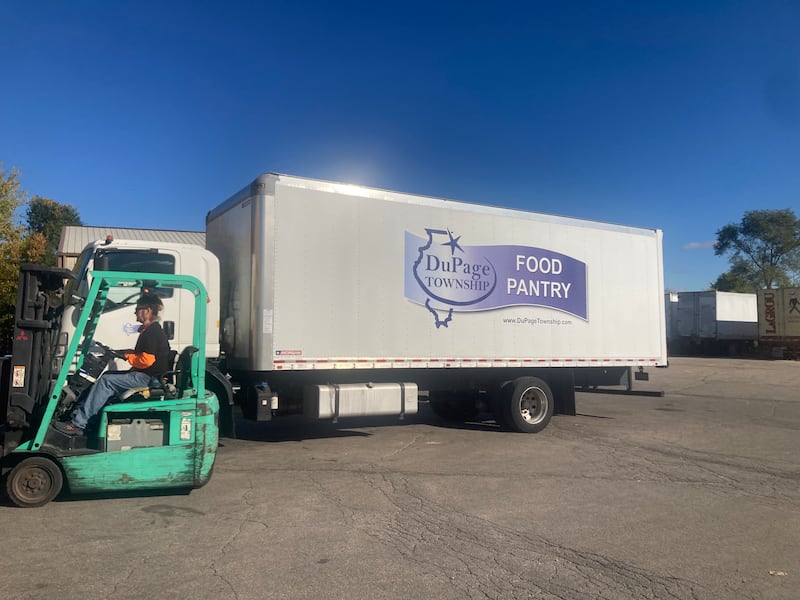
After four years of planning, DuPage Township has announced it is ready to break ground on its new food pantry building
The new pantry, which voters approved in a non-binding 2024 referendum, will be built at the northeast corner of Lily Cache Lane and Canterbury Lane in Bolingbrook, in a ceremony scheduled for 11 a.m. on Monday, April 13.
“We are beyond excited to begin work on this long-awaited project,” said DuPage Township Supervisor Lori Marschke. “It’s been over for years in the making. We are grateful to finally bring about what DuPage Township voters asked us to do. This food pantry is the culmination of the efforts of DuPage Township, with the support of the village of Bolingbrook and township residents.”
Over the last year, the DuPage Township Food Pantry, which currently operates out of the township’s 5,000 square-foot former public works garage in Romeoville, has seen a significant increase in demand.
:quality(70)/cloudfront-us-east-1.images.arcpublishing.com/shawmedia/X6XXFFP7KVCDPOF6LQTVAEMSCI.jpeg)
Between changes and new limitations being placed on SNAP benefits, cuts to federal assistance programs, and inflation, the township says the new, larger facility is “essential to meeting this continuing community need.”
In the groundbreaking announcement, DuPage Township called the current facility “inefficient and undersized for the number of clients served on a weekly basis” and noted that “the main building is deteriorated and debilitated, requiring ongoing and costly maintenance.”
The pantry served 51,053 individuals from 14,308 families and distributed over 2.3 million pounds of food in 2025.
The new planned pantry will be nearly triple the size of the existing space at 14,000 square-feet and will include a larger shopping area to accommodate more people and expanded storage areas in the prep area, including a bigger walk-in freezer and refrigerator.
:quality(70)/cloudfront-us-east-1.images.arcpublishing.com/shawmedia/ATUTV7BEYZEXJOFXSVYUG3RXUM.jpeg)
And, one official noted, the new building will be more conveniently located.
“The current food pantry is in an industrial area, and visitors often deal with semi-tractor-trailer traffic,” said DuPage Township Communications and Engagement Director M. Grace Tucker. “The new location, 400 Lily Cache Lane, is in the center of our township, and is more accessible to the community – offering bus service and bicycle/walking access.”
Why more funds are needed
Construction of the new pantry has largely been made possible through a $3 million federal grant obtained through the efforts of Rep. Bill Foster, D-Naperville, who is expected to attend the ground breaking alongside other local officials.
:quality(70)/cloudfront-us-east-1.images.arcpublishing.com/shawmedia/OV3AMMQEKBCM7IF33HBDDTDMOY.jpg)
The grant was officially secured in 2023 through the U.S. Department of Housing and Urban Development’s Community Project Funding Grant program.
The project faced resistance that lasted a few years and required a change in township leadership to overcome, despite the township purchasing the property soon after it was determined in 2022 that a new pantry was necessary.
Due to the delays, the estimated cost of the project has increased to $5.5 million, resulting in additional fundraising needed, according to Tucker
Tucker noted that part of the funding will come from the sale of the existing pantry’s property. However, additional funds will be needed to construct a garage for the pantry’s trucks as well as more storage space and to equip the new building with fixtures and appliances.
“The current food pantry uses old fixtures – shelves, tables, etc. and appliances that are costly to repair,” Tucker said. “We would like to move our food pantry team into a fresh and updated environment.”
A fundraising campaign is currently underway through the pantry’s website. The pantry is looking to raise about $750,000 for the project, and all donations are tax deductible.
“Community members, businesses, and philanthropic partners are encouraged to help ensure this critical resource can go on to serve even more vulnerable families,” said Marschke.