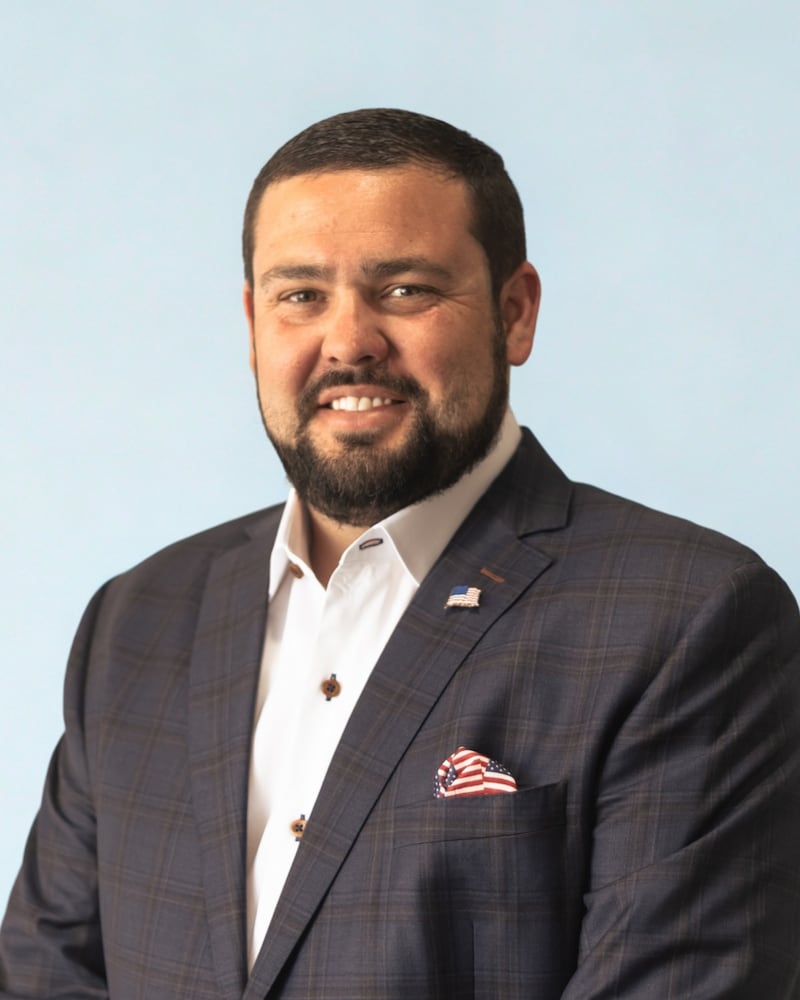
Name: Dillan Vancil
What office are you seeking: U.S. House of Representatives for Illinois’ 17th Congressional District
What is your current age? 33
Occupation and employer: Self-Employed, Founder of Dame Fine Coffee
What offices, if any, have you previously held? West-Central School Board 2021-Present
City: Gladstone
Campaign website: https://www.vancilforcongress.com
Education: West-Central High School
Community involvement: Eagleview Community Health Board Member, Monmouth Area Chamber of Commerce Board Member, West-Central School Board Member (Former Vice President)
Marital status/Immediate family: Married to wife Alyssa, Two boys Mason and Easton
What are your top three legislative priorities for your first year in the U.S. House?
Unleash American energy. My first priority is to unleash American energy so we can finally bring down the cost of everything from gas to groceries. That means reversing the war on reliable baseload power and letting us start burning coal again, expanding natural gas, and investing in safe nuclear so families and manufacturers in this district have affordable, dependable energy.
Lower the cost of living with real tax relief. I will push to eliminate federal income taxes on the first 25,000 dollars of income for individuals and 50,000 dollars for married couples, so Washington stops taking the first bite out of your paycheck, and I will back eliminating federal income taxes for first responders while they are on call, because the people who keep us safe deserve meaningful relief in their own household budgets.
Fix our broken health care system. I will work to fix our broken health care system by driving down prices that have been allowed to skyrocket with no good explanation, cracking down on hospital and insurance middlemen who game the system, and demanding transparency so families know what they are paying for, with reforms focused on paying less for the same care and rewarding better outcomes instead of just more billing codes.
What specific local issues in this district will guide your work in Congress?
One of the unique challenges my district faces is that cities like Rockford, Peoria and small towns like Sterling and Galesburg went from being a true manufacturing hub to a place where manufacturers are leaving almost every day, taking thousands of good jobs with them. Over the past several years, major employers have closed facilities or moved them to other states, citing Illinois’ punishing tax climate, unstable policy environment, and concerns about crime and costs.
On the federal level, I will do everything in my power to make our communities safer, our taxes lower, and our regulatory environment more competitive so that, when Illinois finally fixes its problems in Springfield, our district is ready to grow again. That means fighting against new federal mandates that would punish employers, supporting pro‑growth tax policies, and backing law‑and‑order measures that make it easier not harder for companies to invest and create jobs here. But we also have to be honest with voters: Washington can help set the stage, yet this manufacturing exodus was created by atrocious state policy and taxes, and until Illinois changes course on crime, spending, and its crushing tax burden, we will be competing with one hand tied behind our back.
What federal funding priorities would you advocate for this district, including infrastructure needs like roads, bridges, broadband, and transit?
In Congress, I would make fixing our roads a top federal funding priority, because people in this district feel every pothole, blown tire, and crumbling bridge in their daily lives. I would push for targeted infrastructure dollars to repave main corridors, repair rural routes that farmers and school buses rely on, and modernize key freight and commuter arteries that connect Rockford, the Quad Cities, and Peoria, while insisting that every project is bid transparently and completed on time and on budget so taxpayers actually see and drive on the results.
On the Mississippi and Illinois Rivers, I would support lock and dam upgrades and navigation projects that move our farm goods and manufactured products to market faster, as long as they are done efficiently and with clear benefits for local jobs and taxpayers.
How will you prioritize the concerns of your district versus the priorities of your party?
I will always put common sense and the people of this district ahead of any party agenda. My job is to represent Rockford, the Quad Cities, Peoria, and our rural communities, not to take marching orders from party leaders in Washington. When my party is right for this district, I will work with them; when they are wrong, I will say so and vote the other way. I’m running to put hard working Americans first. That is what every representative in Congress should be doing.
Has Congress given up its Article I powers during the Trump administration? How would you restore congressional authority?
No, Congress has not “given up” its Article I powers during the Trump administration, but too many members in both parties have been willing to hand off hard decisions to presidents and unelected bureaucrats instead of doing their jobs. Article I is clear that all legislative powers are vested in Congress, including taxing, spending, regulating commerce, and declaring war, and I believe Congress needs to start acting like the first branch again. Part of the problem is that too many members of Congress have become incapable of working across the aisle, so instead of hammering out tough compromises, they punt authority to agencies and the White House.
Do you believe any conduct of the current administration needs to be investigated?
No. I do not believe there is any specific conduct by the current administration that warrants a new congressional investigation at this time.
Has the Department of Government Efficiency (DOGE) gone too far in its recommendations?
The reality is that both Republicans and Democrats admit there is massive waste and bloat in Washington, and DOGE is at least forcing a long‑overdue conversation about cutting bad contracts and failed programs instead of just raising taxes or piling on more debt. The Department of Government Efficiency has made mistakes in some of its recommendations, but it has also corrected a number of them, and I do not believe it has “gone too far” overall.
How will you work across the aisle to pass legislation?
If there is common‑sense legislation that puts Americans first, I will vote for it every single time, no matter which party wrote it. I’m willing to sit down with anyone, Republican or Democrat, who is serious about lowering costs, strengthening American energy and manufacturing, and making life better for working families, and I’ll judge every bill by that standard.
Do you support term limits for House members, and if so, what limits?
Yes. I support and have signed the U.S. Term Limits’ pledge that backs a constitutional amendment to limit House members to three two‑year terms and Senators to two six‑year terms, so we have citizen legislators instead of career politicians.
Do you believe the President should have the constitutional authority to order military strikes and detain a foreign head of state without prior Congressional authorization? Why or why not, and where should Congress draw the line between executive action and its own constitutional war powers?
Yes. In a dangerous world, the President must have the constitutional authority to order limited military strikes and, in certain cases, detain a hostile foreign head of state without waiting for Congress, so long as those actions are tied directly to defending American lives or vital interests. The Constitution makes the president commander in chief and gives Congress the power to declare war, which means the president can act swiftly in emergencies and for short, clearly defined operations, but anything that amounts to a sustained war or regime‑change campaign must come back to Congress for explicit authorization and ongoing oversight.
What is your position on U.S. intervention, specifically Ukraine, Israel and Venezuela?
The United States should not be writing blank checks for Ukraine or Israel, especially when our own border is insecure, our debt is exploding, and families here are struggling with the cost of living. In the case of Venezuela, any limited action must be tightly focused on protecting core American interests in our own hemisphere, not on nation‑building or open‑ended commitments. My standard is simple: if a policy or operation clearly benefits American citizens and strengthens our security, I can support it; if it does not, we should not spend the money or risk American lives.
What is your stance on border security and immigration reform?
We need to get serious about border security so no future administration can repeat what we saw under the Biden administration and allow millions of illegal crossings again. Illegal immigration is a slap in the face to every legal immigrant who followed the rules, waited their turn, and earned their citizenship the right way.
Ellis Island–style immigration is very different from what we see today, and it is past time we overhaul our immigration process so it actually serves America’s needs. I believe we should make it far easier for skilled workers and investors to come here legally, because we are the greatest country in the world and the best minds and hardest workers still want to come to America, but right now the process is too slow, too expensive, and too confusing. If you want to come to this country, you should have a job or investment in America already secured, play by our rules, and come here ready to embrace and assimilate into American culture.
Do you support changes to Social Security or Medicare to ensure long-term solvency?
Yes. We absolutely need to make responsible changes to Social Security and Medicare, because we cannot keep kicking this can down the road and pretending the math will fix itself. The next generation deserves a system that will be there for them, not an empty promise and a mountain of debt.
Washington has a spending problem, not a revenue problem, and the first step is cracking down on fraud, waste, and abuse in these programs so every dollar goes to seniors and care. We should be growing our way out of this crisis by bringing back American jobs, rebuilding manufacturing, and making it easier to work, invest, and start a business here at home. When the economy is strong and work pays, it becomes much easier to keep our promises to today’s seniors and tomorrow’s retirees without massive tax hikes or across‑the‑board cuts.
What should Congress do to address healthcare affordability?
Congress should focus on stopping prices from sky-rocketing for no good reason, instead of just throwing more taxpayer money into a broken system. That starts with cracking down on hospital and insurance middlemen who hide prices and use their market power to gouge patients, requiring real price transparency so families know what they will pay before they get care, and pushing more competition so providers and drug companies have to lower costs to win business. We should also give employers and families more affordable options like simpler plans and tax-advantaged accounts, so people can actually afford premiums and deductibles without Washington dictating every detail of their coverage.
Is the CDC a trustworthy, qualified source of information under RFK Jr.? How should public health policy be managed?
Yes, it is a trustworthy, qualified source of information. Public health policy should be managed publicly. When patients are kept in the dark that is where problems, fraud and health concerns occur. This is common sense.
How should Congress regulate artificial intelligence, if at all?
Congress should not strangle artificial intelligence with heavy‑handed regulation while China and other adversaries race ahead. We need America leading the world in AI, because this technology is a massive national security issue and whoever wins the AI race will shape the future of the global economy and warfare. Instead of piling on new red tape, Congress should focus on clearing barriers so American companies can innovate here at home, protecting critical national security uses, and setting a light‑touch national framework that prevents a patchwork of 50 different state rules from crippling startups and handing the advantage to China.
What issues do you feel like you differ from President Trump on?
I don’t agree with President Trump that Illinois is a lost cause. JB Pritzker has done enormous damage and driven people out, but Illinois is not gone yet, and I’m running because I believe we can turn this state around and prove it. If I’m elected, I hope to be able to look President Trump in the eye and tell him that Illinois is not lost, that we fought back, won this seat, and started bringing jobs, families, and common sense back to our once great state.
If Republicans hold the House in 2026, what issues should oversight committees investigate first?
Oversight committees should make their first priority a hard look at how Washington spends our defense dollars. Oversight is not harassment; it is how Congress makes sure taxpayer money goes to the men and women who serve, not to waste, bad contracts, or politically connected NGOs.
Right now, our Department of War pushes billions of dollars out the door to contractors and NGOs while basic needs on the ground are still missed. You hear real stories of units in the field short on proper winter gear while other bases have closets stuffed with extra coats that will never be worn, all because no one is watching the logistics and the books closely enough. That is exactly what happens in a system where vendors can charge the Pentagon outrageous markups for everyday items and get away with it, with audits showing parts bought at several times their reasonable price and even thousands of percent over market for simple components.
I would push for much tougher, targeted oversight of the Pentagon and broader Department of War spending, with aggressive investigations into contracting, NGO grants, and logistics so that every dollar goes first to our service members’ pay, training, and equipment.
What issues, if any, do you agree with Democrats on?
I do think Democrats are right to be focused on health care costs, especially prescription drugs, because families are getting crushed at the pharmacy counter. For years, people in both parties have said Americans should not pay more than other developed countries for the same medicines, and the current administration has finally moved on that with most‑favored‑nation–style drug pricing so we are no longer subsidizing the rest of the world on many key drugs.
Should private equity and hedge funds be allowed to purchase so many homes?
No. Wall Street private equity and hedge funds should not be allowed to buy up huge numbers of homes and turn entire neighborhoods into corporate rental portfolios while young families are locked out of ownership. Congress should move to sharply limit bulk purchases of single‑family homes by large financial firms so Main Street homebuyers, not distant investors, get the first shot at starter homes.
Do you support or oppose the expansion of work requirements for SNAP recipients? Why?
I support expanding work requirements for most SNAP recipients, with important exceptions for single mothers and people with disabilities. As someone who grew up on SNAP raised by a single mom, I’ve seen how vital the program is when it’s a bridge, not a lifestyle, and I also know it has become a system some people take advantage of. Work requirements, paired with real support like job training and childcare, help keep the focus on work, independence, and upward mobility, while protecting those who truly cannot work or who are already doing everything they can to provide for their kids.
Who are your top donors? How often do you speak with them?
My top donors are everyday Illinois residents and small business owners who care about making Illinois a great state again, not D.C. special interests or coastal billionaires. I talk with major supporters maybe once every couple of months for campaign updates and to hear what they’re seeing on the ground, but they do not set my agenda, the voters do. My opponent, who has taken money from George Soros and foreign interests, cannot honestly say the same.
How would you reform U.S. trade policy so that farms don’t need repeated bailouts from tariff impacts?
Congress should stop using band‑aid bailouts and fix trade policy so farmers are not collateral damage every time there’s a trade war. The goal has to be fair trade, stable markets, and lower input costs so farm income comes from selling crops and livestock at a fair price, not waiting on the next government check.That kind of stability only comes from tough, smart negotiations, and the current administration is finally doing that instead of being taken advantage of by China which every single administration has done for the past 20 years. Going forward, I want Congress to back a trade strategy that keeps markets open for our producers, protects key farm inputs from broad tariff swings, and makes sure any future aid is not a permanent crutch for bad policy.