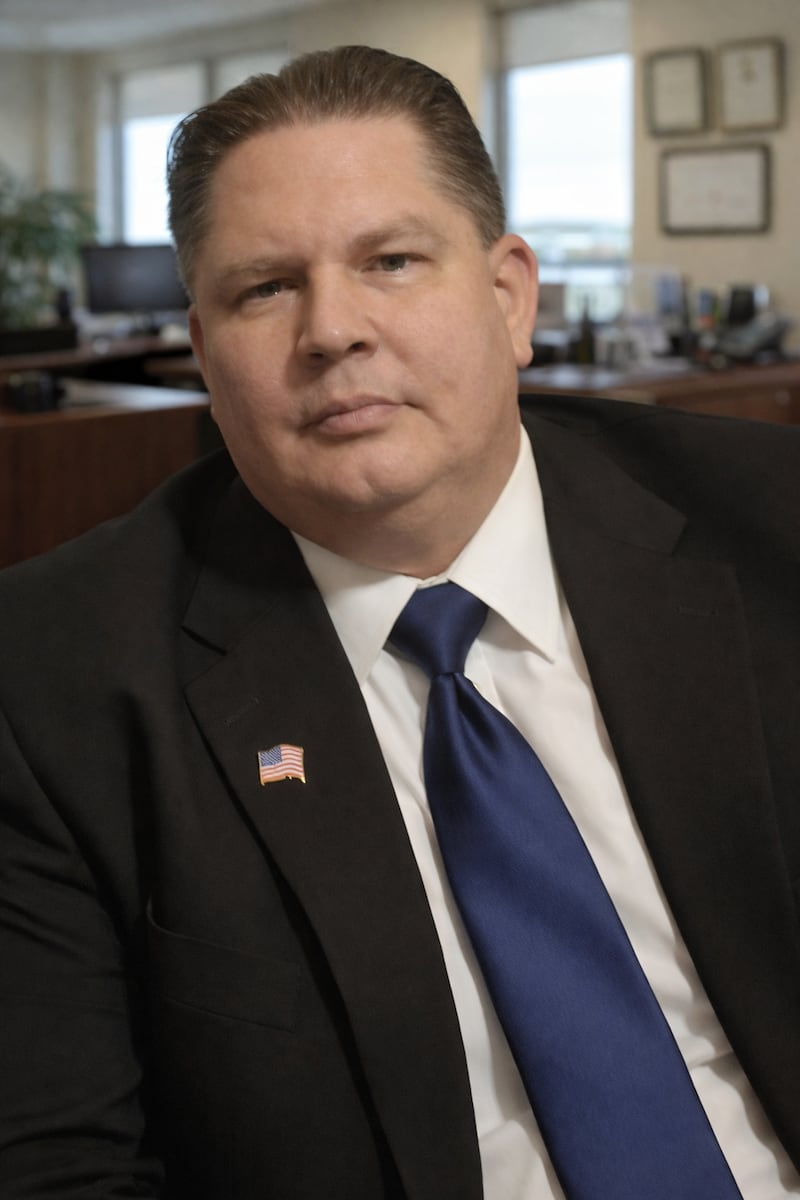
Name: Walter Adamczyk
What office are you seeking: Illinois Secretary of State
What is your political party? Republican
What is your current age? 48
Occupation and employer: Laborer-Fpd Forest Preserve
What offices, if any, have you previously held? I’ve built my political experience from the ground up, right here in my own community.
I currently serve as the Republican Committeeman for Chicago’s 29th Ward, representing a ward of roughly 53,000 residents. I was elected by the voters of the 29th Ward as Republican Committeeman in 2020 and re‑elected in 2024, giving me two consecutive terms of leadership and service at the neighborhood level. Those elections reflect the trust my community has placed in me to organize locally, engage voters directly, support candidates who share our values, and make sure our voices are heard.
In 2023, I stepped forward as a write‑in candidate for Alderman of the 29th Ward because I believe voters should always have a choice. Now, I’m continuing that commitment to public service as a candidate for Illinois Secretary of State in the 2026 election cycle.
My experience reflects grassroots leadership, real community engagement, and a willingness to step up and serve.
City: Chicago
Campaign website: https://walter2026.com/
Education: I’m proud of the foundation that shaped who I am and the path I’ve worked hard to build.
I attended St. William Catholic School in Chicago, where I completed grade school and developed the values of faith, discipline, and respect. I later graduated from Holy Cross in 1997, continuing to strengthen my commitment to responsibility and perseverance.
I went on to attend Triton College, pursuing engineering and completing all but five classes toward graduation. During my time there, I earned recognition on the Principal’s Honor Roll — an achievement that reflected my dedication to academic excellence and hard work.
In 2005, I earned my CNC (Computer Numerical Control) certification, gaining hands-on technical training in precision manufacturing and machinery. That licensing represents discipline, attention to detail, and accountability — qualities that carry over into both professional life and public service.
My background is built on strong early education, advanced technical training, academic achievement, and real-world experience. I believe in earning everything through hard work, and I bring that same mindset to serving my community.
Community involvement: Community service isn’t something I talk about only during an election season — it’s something I’ve lived.
During the COVID-19 pandemic, I personally helped distribute over 10,000 protective masks to senior homes, police stations, and fire departments. In a time of uncertainty and fear, I believed it was important to step up and protect the most vulnerable and those serving on the front lines.
I am a proud Board Member of the Galewood Montclare Community Organization (GMCO), where we work to strengthen our neighborhoods, support families, and advocate for responsible leadership in our community.
Through The Adamczyk Foundation, I have volunteered to help provide food and clothing to individuals experiencing homelessness. Serving those in need reminds me that leadership starts with compassion and action.
I also volunteered at my local library during the summer, supporting community programs and helping residents access important resources.
Marital status/Immediate family: I am a proud uncle. I do not have children and I am not married.
Family means everything to me. I help support my elderly mother financially because taking care of the people who raised you is not a responsibility — it’s an honor.
Being an uncle has allowed me to stay closely connected to the next generation, to mentor, guide, and set an example through hard work and integrity.
What is your plan to improve DMV and driver services?
Driver services in Illinois should be efficient, professional, and respectful of people’s time. Right now, too many residents experience long lines, outdated systems, and unnecessary frustration. That is not acceptable.
My plan is simple: modernize, streamline, and hold the system accountable.
First, we will reduce wait times by expanding appointment scheduling, extending hours in high-traffic locations, and adding Saturday service where demand requires it. People should not have to miss work just to renew a license.
Second, we will modernize technology. That means expanding online services, increasing secure self-service kiosks, and upgrading outdated systems that slow down processing. Government must operate at the speed of today’s world — not decades past.
Third, we will expand mobile driver service units to better serve seniors, veterans, and underserved communities. If residents cannot easily get to a facility, we will bring services closer to them.
Finally, we will implement stronger customer service standards and transparent performance reporting so taxpayers know exactly how their driver service facilities are performing.
The goal is clear: shorter lines, faster service, modern technology, and a system that respects the people it serves.
How will you reduce wait times and modernize online services?
Reducing wait times starts with respecting people’s schedules. No one should have to take half a day off work just to complete a basic driver service transaction.
First, I will expand and enforce a true appointment-based system statewide so walk-in chaos becomes the exception, not the rule. Facilities in high-demand areas will have extended weekday hours and expanded Saturday availability. We will also implement real-time online wait tracking so residents can see facility traffic before leaving their home.
Second, we will streamline in-office services. Many transactions that currently require a counter visit can be pre-processed online — including document uploads, form completion, and verification checks. When someone walks into a facility, most of the work should already be done.
To modernize online services, we will fully upgrade outdated systems and make the website mobile-friendly and simple to navigate. Renewals, address changes, duplicate IDs, and appointment scheduling should be seamless. I also support expanding secure self-service kiosks in grocery stores and public buildings so residents can handle routine services without ever standing in line.
Government should operate efficiently, securely, and at the speed of modern life. Shorter lines and stronger technology are not luxuries — they are basic expectations.
What is your approach to maintaining voter registration systems and election integrity?
Maintaining the integrity of our elections is not just a duty—it’s a promise to every Illinois voter. My vision is simple: secure, accurate, and transparent voter registration systems that ensure every eligible voter can participate with confidence. I am committed to keeping our voter rolls up-to-date, safeguarding them against misuse, and making sure election operations are fully staffed and professionally managed.
Transparency and trust are the foundation of democracy, and I will work tirelessly to strengthen both, so every voter knows their voice is heard and every vote counts.
Do you support any changes to automatic voter registration?
In my vision for Illinois, I support carefully managed automatic voter registration that balances accessibility with security. Every eligible citizen should have the opportunity to participate in our democracy, but we must ensure that the systems protecting voter information are airtight and transparent.
Automatic registration can strengthen civic engagement—but only when it’s implemented with safeguards that earn the public’s trust.
How will you improve library grants and literacy programs?
Libraries are more than places to check out books — they are community hubs for learning, opportunity, and connection. I believe we must invest in stronger library grants and expanded literacy programs so families, children, and adults have the resources they need to succeed.
First, I will work to increase funding for library grants that support both traditional and innovative services. These grants should help libraries update technology, expand collections, and bring new programs into neighborhoods where access is limited. Grants can also help libraries partner with schools and nonprofits to reach more families with literacy support. For example, competitive grant programs across the country have enabled libraries to boost digital access, provide technology training, and expand literacy programs for children and adults alike, especially in underserved areas.
Second, I will prioritize literacy initiatives for all ages — from early childhood reading and summer reading programs to adult literacy and workforce‑related learning. Federal and state grant programs that support literacy — including those that fund school library initiatives and adult learning centers — show that targeted investment has measurable impact on learning outcomes.
I also support efforts to strengthen library staff capacity by providing training and professional development tied to these grants, helping librarians deliver the best possible programs to their communities. Investing in literacy means investing in our future — it gives children the foundation to thrive in school and adults the tools for lifelong success.
What cybersecurity improvements are needed for state systems?
Protecting our state’s digital infrastructure isn’t optional — it’s essential. As your Secretary of State, I will champion modern cybersecurity standards that safeguard our systems and the personal information of every Illinois resident.
That means upgrading outdated technology, investing in strong encryption and multi‑factor authentication, and conducting regular independent security audits to uncover vulnerabilities before bad actors do. We should also expand training for every employee who touches our networks — because people are the first line of defense.
Transparent incident reporting and coordinated response plans will help build public confidence, so citizens know their data and their democratic processes are protected. A secure state system is a trusted state system, and I’m committed to making that a reality.
Do we have enough DMV offices?
We’ve made progress expanding services, but we do not yet have enough DMV offices to meet the needs of every community in Illinois. Too many families, workers, and seniors face long drives and long waits just to access basic driver‑related services.
That’s why I believe we should strategically increase the number of DMV facilities in growing and underserved areas — especially in parts of the state where residents currently travel the farthest or wait the longest. But building new offices is only part of the solution.
We also need to make better use of modernized scheduling systems, mobile service units, and extended hours so that residents can get in and out efficiently without losing a whole day to a simple transaction. And where full‑service offices aren’t feasible, we should explore satellite locations and community‑based access points that bring services closer to people.
Illinois should serve every community fairly — and that means both enough physical locations and enough flexible, modern options so that accessing driver services is easy, reliable, and respectful of people’s time.
Should this office provide more voter information to the federal government?
As your next Secretary of State, we will clean up the voter rolls — no more dead people voting in Illinois. I am also a strong proponent of requiring picture IDs to vote, so every vote is verified and every voter is legitimate.
Every record will be accurate, every part of the department carefully overseen, and any information shared with the federal government will be done securely and only when necessary. Illinois deserves elections that are fair, secure, and trusted by every voter.
Has this office been politicized?
Yes — this office has been politicized, and the people of Illinois have felt the consequences. Decisions that should serve every voter, every citizen, have too often been guided by party lines and political games. That ends now.
As Secretary of State, I will put the people first, not politics. Every system, every process, every decision will be transparent, fair, and accountable. Illinois deserves leadership that works for them — not for political insiders.