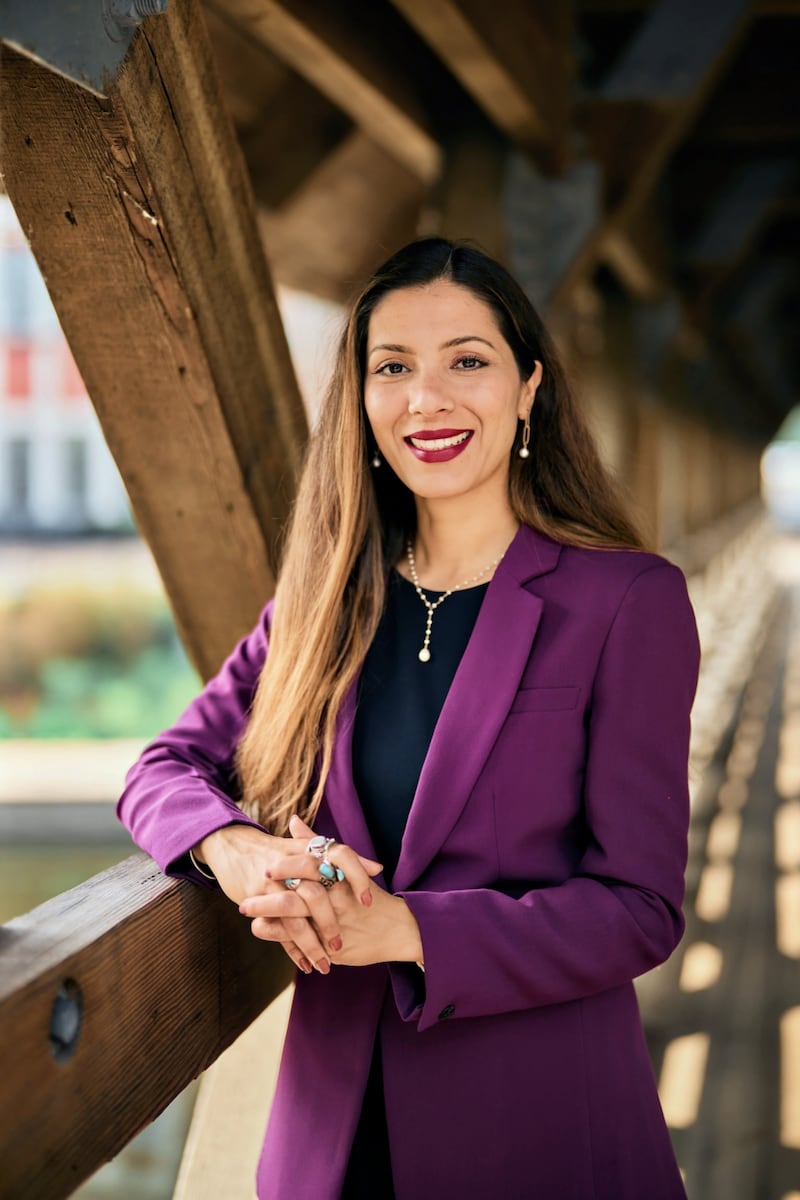
Name: Saba Haider
What office are you seeking: Saba Haider, State Representative, District 84
What is your political party? Democrat
What is your current age? 41
Occupation and employer: Small Business Owner
What offices, if any, have you previously held? I am currently serving as the DuPage County Commissioner.
City: Aurora
Campaign website: https://www.sabahaider.com/
Education: Master’s in Wildlife Science
Community involvement: Current Leadership and Community Experience
Board Member, Public Health Board - DuPage County Health Department (DCHD)
Director, Indian Prairie Educational Foundation (IPEF)
Leadership Team, Parent Diversity Advisory Council (PDAC)
Chair, Strategic Planning Committee, DuPage County Board
Chair, Environmental Committee, DuPage County Board
Co-Chair, Ad-Hoc Housing Solutions Committee
Committee Member: Economic Development, Finance, Judicial & Public Safety Committees
Member, DuPage Housing Authority
Chairperson and Co-Founder, Will & DuPage Counties Democratic AAPI Caucus
Past Leadership and Community Experience
2nd Vice President, Indian Prairie Parents Council (IPPC)
Board Member, Variety, the Children’s Charity of Illinois (for children with disabilities)
PTA President, Still Middle School
Chair, Scholarship Committee, IPPC, for awarding scholarships to high school students at all three high schools in School District 204
Chair, Nominating Committee, for nominating the next Executive Board of IPEF, including the Chair
Chair, Health and Wellness Committee, IPPC
Chair, Snack Drive Committee, IPPC
Committee Member, A+ Teacher Award, IPEF-Dist. 204
Community Representative, Boundary Change Committee, District 204
Community Representative, Strategic Planning Team, District 204
Team Member, Citizen Task Force, IPSD 204
Class of 2024, Illinois Women’s Institute for Leadership Training Academy
Grassroots Advocacy Work
Member, Fundraising Committee, Democratic Women of DuPage County
Member, Democratic Women of Kane County
Member, Naperville Township Democrats
Marital status/Immediate family: Married with two kids, 17 and 13.
What are your top three priorities for this district in Springfield?
Economic Growth
As a small business owner myself, I am committed to fostering economic growth by supporting local businesses, helping families thrive through job creation, improving public services, and promoting financial security.
Mental Health & Addiction Services
With the experience of serving on the Public Health Board, I am a strong advocate for enhanced mental health infrastructure, especially for youth and seniors, I support funding critical mental health and addiction resources, along with other social and safety services that keep communities safe and thriving.
Strong public schools and support for educators
I am running to bring community-driven leadership to Springfield and deliver results for District 84. My priorities include strong public schools, support for educators, economic opportunity for working families, and protecting healthcare access. I will listen, collaborate, and fight for policies that reflect our community’s values.
How will you support economic growth and development in your district?
I support economic development that grows good-paying jobs while strengthening our local communities. That means investing in small and minority-owned businesses, expanding workforce training and apprenticeship programs, and revitalizing commercial corridors to attract new employers. I will also fight for infrastructure improvements. I support property tax relief for homeowners and small businesses without cutting school funding. I will fight to protect access to affordable healthcare to reduce financial strain on families and employers
Economic growth must be inclusive, sustainable, and benefit working families across District 84.
Do you support term limits for state representatives, and if so, what limits?
Yes, I do. I beleive 10-12 years is a good amount of time to serve the District. 5-6 terms for a State Rep. postion is a good limit.
How will you address the state’s long-term pension obligations?
Illinois’ pension crisis presents a serious challenge, but it must be understood in its full context. The problem developed over decades due to chronic underfunding and deferred obligations, not because public servants received excessive benefits. Any responsible solution must begin with that reality and with a commitment to keeping promises already made.
The state should continue consistent and responsible pension funding while exploring ways to reduce long-term costs. This includes refinancing high-interest debt where appropriate, offering voluntary buyouts to reduce liabilities, and improving efficiency across pension systems. These steps require transparency and careful planning, but they can help stabilize Illinois’ finances over time.
A sustainable pension system benefits the broader economy. It improves the state’s credit outlook, supports workforce retention, and increases confidence among employers considering investment in Illinois. Short-term fixes that shift costs to retirees or future taxpayers only make the problem worse.
Addressing the pension crisis requires discipline, honesty, and a long-term perspective. Illinois must move beyond political rhetoric and focus on practical steps that create stability for both workers and taxpayers.
How will you address property taxes and school funding reform?
I will work to lower the property tax burden on homeowners while protecting strong, fully funded public schools. That means advocating for increased and more equitable state funding so local communities are not forced to rely so heavily on property taxes to support education. I support targeted property tax relief for seniors and working families, paired with school funding reforms that close equity gaps between districts. We can provide real tax relief without sacrificing educational quality or shifting the burden onto those least able to afford it.
What is your stance on the SAFE-T Act? What changes, if any, would you support?
I support the SAFE-T Act because our justice system should be fair, humane, and focused on real public safety, not on who can afford to pay cash bail. Ending cash bail helps ensure people are not jailed simply for being poor, while judges retain the authority to detain individuals who pose a genuine threat to the community. I support continued investments in implementation, including resources for courts, public defenders, and pretrial services, as well as expanded mental health and substance-use supports. Any changes should strengthen due process, reduce racial and economic disparities, and keep communities safe without rolling back core reforms.
What legislation would you propose to address crime and public safety in your district?
I would advance legislation that takes a comprehensive approach to public safety, focused on prevention, accountability, and community trust. This includes investing in violence prevention programs, expanding access to mental health and substance-use treatment, and strengthening reentry supports to reduce recidivism. I also support funding for trauma-informed policing, modernized training, and resources that help law enforcement respond appropriately to mental health crises. Public safety works best when we address root causes, protect civil rights, and ensure every community feels safe and respected.
What is your stance on reproductive rights in Illinois?
I believe that individuals and families should be able to make personal healthcare decisions in consultation with medical professionals, without political interference. It means protecting access to the full spectrum of reproductive healthcare, safeguarding privacy, and ensuring that care is affordable and accessible to all, regardless of income or zip code.
What is your opinion of the TRUST Act (sanctuary state protections)?
The law is intended to make immigrant communities safer, encourage trust in public services, and ensure that people can report crimes or access essential services without fear of triggering immigration enforcement. I will support strengthening the TRUST Act to close loopholes and adapt to evolving federal enforcement practices. Illinois must ensure that state and local law enforcement are not used to carry out civil immigration enforcement. Protecting due process and fostering trust allows immigrant communities to safely access services and cooperate with law enforcement, which strengthens public safety for everyone.
Should the state expand Medicaid funding?
Healthcare coverage is fundamental to community well-being and economic stability. Illinois should not allow federal rollbacks from reversing decades of progress. Often at the doors, people are frustrated at how difficult and cumbersome the processes to access public benefits can be, especially if English is not their native language. Making sure that we simplify renewal processes, expand eligibility periods, and invest in multilingual outreach resources can go a long way in making sure we prevent people from falling through the cracks.
Should local governments have more authority over solar farm development in their communities?
Yes, I believe local governments should have a meaningful voice in solar farm development to ensure projects fit the needs, character, and priorities of their communities. At the same time, we need statewide standards that promote clean energy, protect the environment, and create good-paying local union jobs. Balancing local input with strong renewable energy goals will help Illinois grow sustainably while empowering communities to have a say in how clean energy is implemented.
Should Illinois expand use of nuclear energy, including facilities like the Byron plant? What’s your vision for the state’s energy mix?
As the Chair of the Envirnmetal Committee on the DuPage County Board, I have worked hard to make sure that we continue to invest in green infrastucture. Weather it is EV readiness, or adding solar panels, I have championed sustainable efforts at the County. In the General Assembly, I will support a balanced and sustainable approach to Illinois’ energy future that prioritizesclean, reliable, and affordable power. Nuclear energy, including existing facilities like Byron, can play a role as a low-carbon source while we continue to expand renewable energy like wind and solar. My vision is a diverse energy mix that reduces greenhouse gas emissions, invests in emerging clean technologies, creates good-paying jobs, and ensures energy security for families and businesses across the state.
What role should the state play in housing affordability?
I serve as the Co-Chair of the DuPage County Ad Hoc Housing Committee and the DuPage Housing Authority Board. I strongly believe that we should be Illinois faces a severe housing shortage, and ADUs are a common-sense, low-impact way to quickly expand affordable housing options. I support legislation that allows ADUs statewide while ensuring all health, safety, and building standards remain intact. ADUs can help seniors age in place, support multigenerational families, and increase supply.
The demand for smaller, attainable homes is high, and outdated zoning rules are preventing the market from meeting that demand. I support sensible zoning reforms that reduce unnecessary barriers, such as oversized minimum lot requirements, and allow for modest increases in diverse housing types. These changes can expand affordability while still providing the option of traditional single-family neighborhoods.
How should the state address rising energy costs from data centers? How do you balance water rights between communities and industry regarding data center development?
Illinois must ensure that the rapid growth of data centers does not shift higher energy or water costs onto residents and small businesses. I support requiring large data centers to pay their fair share through transparent utility rate structures, energy-efficiency standards, and on-site or contracted clean energy generation to reduce strain on the grid. The state should also set clear water-use standards that protect local water supplies, require conservation and recycling plans, and give communities a real voice in making those decisions.
To what level should the state fund a new stadium for the Chicago Bears?
The state should not provide open-ended or blank-check funding for the new Chicago Bears stadium. Any public investment must be limited, transparent, and tied to clear public benefits, such as infrastructure improvements, strong labor standards, and protections for local taxpayers and schools. Large-scale developments such as a professional sports stadium should not mean that megadevelopments shift that burden onto homeowners and small businesses. Private owners should bear the primary cost, and state resources should be prioritized for education, public safety, housing, and infrastructure that benefit communities statewide.
Should the state regulate the use of AI in the classroom? To what extent?
Yes, the state should play a role in regulating the use of AI in the classroom to ensure it supports learning, protects students, and respects educators’ professional judgment. That means setting clear guardrails around data privacy, transparency, and equity, while preventing the misuse of student data and algorithmic bias. At the same time, schools and teachers should retain flexibility to use AI as a tool to enhance instruction, reduce administrative burden, and support individualized learning—not replace educators. Thoughtful regulation can encourage innovation while keeping students’ rights and educational quality at the center.
Who are your top donors? How often do you speak with them?
My campaign is powered by grassroots supporters, working families, and labor unions. The vast majority of my donations are small-dollar contributions, andI talk to my donors to discuss issues, policies, and concerns as and when needed.I do not rely on corporate PAC money.