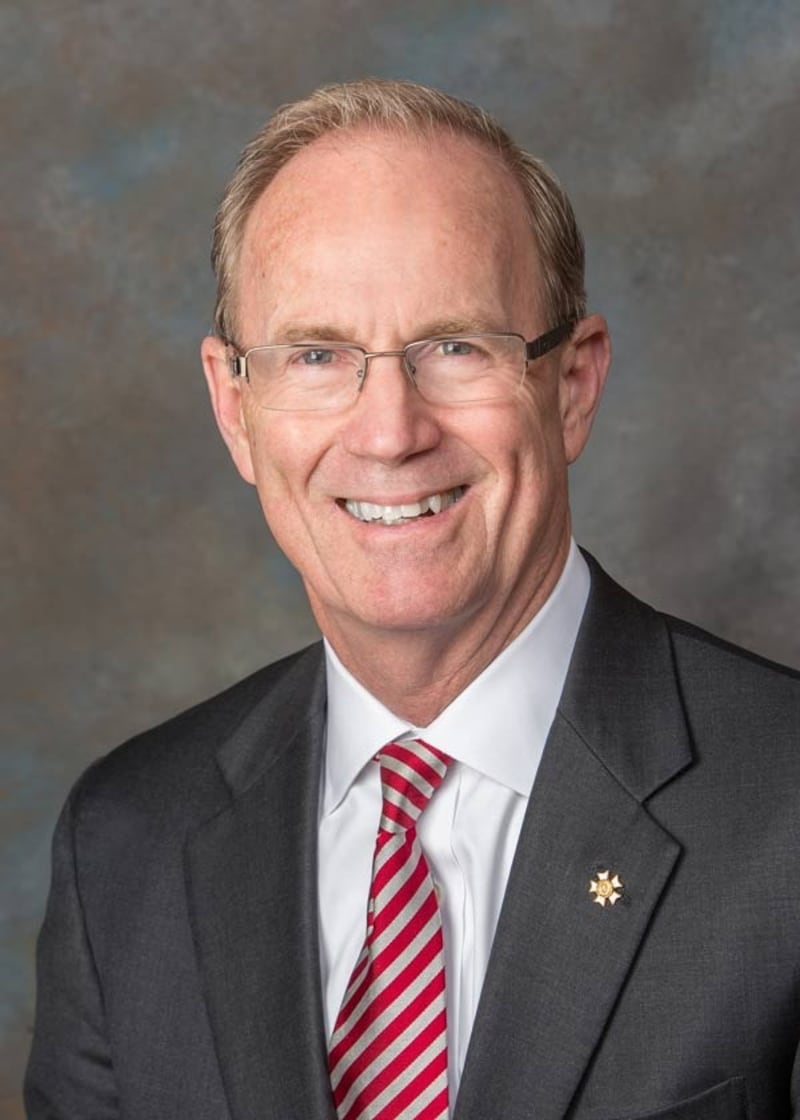
Name: Don Tracy
What office are you seeking: United States Senate
What is your political party? Republican
What is your current age? 75
Occupation and employer: Senior Counsel at Brown, Hay & Stephens, the oldest law firm in Illinois, where Abraham Lincoln famously first practiced law
What offices, if any, have you previously held? I have not previously held a publicly elected office. However, I was elected Chairman of the Illinois Republican Party twice, appointed Chairman of the Illinois Gaming Board by the Illinois Governor, appointed Chairman of the Corporate Acts Advisory Committee by the Illinois Secretary of State, and appointed President of the Oak Ridge Cemetery Board by the Springfield MayorNone of these positions paid significant compensation.
For decades, Illinois and Washington have been dominated by career politicians, like my likely Democrat opponents, who talk about working families but have never lived the consequences of their policies. I’m stepping forward as an everyday Illinoisan with real-world experience: someone who has built businesses, made payroll, raised a family, and worked alongside people who feel the rising cost of living every single day.
I started working at age 10 in my family’s business, eventually practicing law for several decades and representing families, farmers, manufacturers, and small businesses across Illinois in addition to my family’s business. I’ve led and served in statewide civic and professional organizations, helping guide complex decisions that affected real people, not headlines or political talking points.
I’m not running to climb a political ladder or serve special interests. I’m running because Illinois working families are being squeezed by higher taxes, rising utility bills, expensive health care, and an economy that’s falling behind. Career politicians created these problems. It’s time for a strong, common sense leader from the working class to help fix them and represent all Illinoisans in Washington.
City: I live in Springfield, in the heart of Central Illinois, where my wife and I raised our 4 children. I was born in Urbana in Eastern Illinois, raised in Mt. Sterling in Western Illinois, and have spent decades living and working in Central Illinois. Business and civic commitments have also taken me up to Chicago and the suburbs regularly over the years. Those experiences give me a deep appreciation for the diversity of Illinois, and why I am the best candidate to represent all 102 counties in the U.S. Senate.
Campaign website: DonTracyforIL.com
Education: I earned my undergraduate degree from Arizona State University and went on to earn my law degree from the University of Memphis Law School. I worked my way through grade school, high school, college and law school , learning firsthand the value of hard work, responsibility, and perseverance. My education, combined with decades of real-world experience as an attorney and community leader, has shaped my practical, common-sense approach to problem-solving and public service.
Community involvement: I’ve been active in civic and community organizations throughout my career. I’ve served in leadership roles including Chairman of the Illinois Republican Party, Chairman of the Illinois Gaming Board, Secretary of the Illinois Bar Foundation, President of the Sangamon County Bar Association, Chairman of the Illinois Secretary of State Corporate Acts Advisory Committee, President of the Abraham Lincoln Association, President of the Oak Ridge Cemetery Board, and President of the Dana Thomas House Foundation. I’ve also served on local boards and committees such as the Springfield YMCA, Springfield 1908 Race Riot Commission, Clark-Griffith Little League, Frontiers International–Springfield Club, and Blessed Sacrament Church, and I’ve helped raise funds for numerous charitable and political causes.
Marital status/Immediate family: I’m married to my wife, Wanda. We’ve raised four children and are now proud grandparents to eight grandchildren. My experiences as a husband, father, and grandfather have shaped my commitment to strengthening families, defending the American Dream, and lowering the cost-of-living for everyday Illinoisans.
What are your top three legislative priorities for your first year in the U.S. Senate?
I will push for common sense solutions that make life more affordable for working families. This includes lowering energy and gas costs, health care costs, taxes, and inflation. It also includes improving the economy and supporting small businesses, manufacturers, and farmers throughout Illinois.
I will champion common sense solutions, not extreme agendas, by working for everyday Illinoisans, not special interests. Unlike my career politician opponents, I understand the struggles of working families and will be the voice for everyday Illinoisans in Washington.
Finally, I will represent all of Illinois, not just Chicago. After the retirement of Dick Durbin, all statewide elected officials in Illinois will reside in Chicago or Cook County—and that’s where my Democratic opponents are all from as well. That means the other 101 counties in Illinois will not have representation, unless voters elect me in November.
Should the Senate eliminate the filibuster? Do you support term limits for senators, and if so, what limits?
I do not support eliminating the filibuster. The Senate was designed to encourage debate, compromise, and stability. Getting rid of the filibuster would lead to “yo-yo government,” where major policies swing wildly every time control changes hands, which creates uncertainty for families, businesses, and our economy. That’s not common sense leadership.
I do support term limits for members of Congress, including senators. Washington works best when it has citizen-legislators, not career politicians. I support a constitutional amendment that would place a reasonable limit on senators’ six-year terms, so new ideas can emerge while still allowing time to gain experience and get real work done for the people they represent.
How do you plan to work with or oppose the Trump administration? What’s your approach to bipartisanship?
I will work with anyone, Republican or Democrat, if it means lowering the cost of living for Illinois families in a meaningful and effective way. That includes reducing energy, health care, and grocery costs, cutting waste and fraud, and supporting small businesses, farmers, and manufacturers. But I won’t support policies that play political games for leverage, or push extreme agendas that hurt working people. Bipartisanship isn’t about headlines. It’s about results. I’ll oppose ideas that give government too much unchecked power, create spending that lacks oversight, or make life less safe.
How would you address inflation and rising costs for Illinois families?
Illinois families are being hurt by inflation and a sky-high cost of living. I’ll tackle this with common sense solutions that lower everyday expenses, starting with energy, gas, groceries, housing, and health care. That means pursuing a responsible energy policy that keeps utility costs down, cutting waste and fraud in government to reduce inflationary spending, lowering taxes, and increasing competition and transparency in health care to bring down prices. I’ll also fight to reduce overregulation that drives up costs for small businesses, manufacturers, and farmers because when it costs less to do business, families pay less too. I’ve lived these struggles, and in the U.S. Senate my top priority will be making life more affordable for working Illinois families across all 102 counties.
What federal actions should Congress take to improve health care affordability?
Health care is too expensive. Congress should increase price transparency so patients know what they’re paying before they receive care, expand competition in the health insurance and pharmaceutical markets, and reduce unnecessary regulations that drive up costs for providers and families. We should lower prescription drug prices by encouraging generics and faster approvals, while protecting innovation. We also need to reduce waste, fraud, and abuse in federal health programs and end taxpayer-funded free health care for non-citizens. My focus is simple: lower costs, protect quality care, and make health care affordable for working families across all of Illinois.
Do you support changes to Social Security or Medicare to ensure long-term solvency?
No. Social Security and Medicare are promises earned through a lifetime of work, and Washington has a duty to keep them solvent without breaking faith with retirees. The real solutions are growing the workforce, strengthening wages, cracking down on waste, fraud, and abuse, and lowering health care and prescription drug costs. Career politicians created this problem by spending recklessly and kicking the can down the road. I’ll focus on pro-family, pro-worker policies that strengthen the economy so these programs remain secure for today’s seniors and future generations.
The administration has described the $12 billion aid package to farmers as a “bridge payment” to offset losses from the trade war and tariffs. What changes, if any, would you make to U.S. trade policy to address the challenges facing farmers?
Farmers don’t want bailouts. They want fair markets, stable rules, and the ability to plan for the future. Bridge payments may offer short-term relief, but they are not a long-term solution. We need a trade policy that is tough enough to protect American agriculture from unfair foreign practices while also opening new markets for Illinois farmers. That means enforcing existing trade agreements, expanding export opportunities, supporting year round E15 sales, and ensuring farmers aren’t collateral damage in political fights. I will work for common-sense trade policies that lower input costs, reduce uncertainty, and give Illinois farmers a level playing field so they can compete, grow, and continue feeding our country and the world.
How should the U.S. balance border security with comprehensive immigration reform?
The United States can and must do both. Border security is the foundation of any serious immigration reform. A nation that cannot control its borders cannot fairly enforce its laws or protect working families. We need to secure the border, stop illegal crossings, and end taxpayer-funded benefits for non-citizens. From there, Congress should pursue common sense reforms, such as streamlining legal pathways, enforcing workplace laws, and ensuring our economy has the workforce it needs without undercutting American workers. Career politicians have played political games for decades while communities pay the price. I will champion practical solutions that restore the rule of law, protect public safety, and keep the American Dream within reach for everyday Illinoisans.
Do you believe the President should have the constitutional authority to order military strikes and detain a foreign head of state without prior Congressional authorization? Why or why not, and where should Congress draw the line between executive action and its own constitutional war powers?
The Constitution gives the President limited authority to act swiftly to defend the United States against imminent threats, including targeted military strikes, but that power is not unlimited. Long-term military action or regime change must involve Congress, as the Constitution clearly vests war-making authority with the legislative branch. A strong President should be able to act decisively in emergencies, but a free republic cannot allow unilateral, open-ended wars without debate or accountability. Congress has the responsibility to authorize sustained military action and ensure transparency, oversight, and respect for constitutional checks and balances.
What is your position on U.S. intervention, specifically Ukraine, Israel and Venezuela?
U.S. foreign policy must be guided by strength, clarity of purpose, and the interests of the American people. We should stand firmly with our allies, like Israel, in their right to defend themselves against terrorism. And we must confront hostile regimes that threaten U.S. security and regional stability. At the same time, our involvement in other countries’ affairs cannot be open-ended or driven by political pressure. America should lead with strength and diplomacy, deter our adversaries, and avoid endless foreign entanglements that distract from securing our own borders and lowering costs for working families here at home.
Where do you stand on federal legislation regarding abortion access and reproductive rights?
This is an issue that should be approached with humility, respect, and common sense. Science clearly shows that an unborn child is a developing human life. The Supreme Court has ruled abortion is a state issue. I’m running for federal office. Like Sens. Josh Hawley of Missouri and Sen. Ted Cruz of Texas, therefore, I believe we must abide by the US Constitution and leave it to states to decide abortion issues. I also believe Congress should not spend taxpayer dollars to fund abortions, except for rape, incest or to save the life of the mother, and should instead focus on policies that reduce unintended pregnancies, such as better public safety, health care access, adoption support, and economic stability.
Should federal law protect same-sex marriage rights? What’s your position on LGBTQ+ protections?
I believe every Illinoisan deserves to be treated with dignity and respect under the law. Federal policy should protect people from discrimination while respecting constitutional limits and the role of states. Same-sex marriage is currently the law of the land, and I do not have any interest in legislating the relationships of consenting adults. At the same time, I oppose using the federal government to impose extreme social agendas or punish people of faith for their sincerely held beliefs.
Is systemic racism still an issue in the United States? What role should the federal government play in addressing it?
I believe every person should be treated with dignity, fairness, and equal protection under the law. Racism is still an issue in the US, but is no longer legal, official or systemic. The federal government’s role should be to enforce equal opportunity and treatment under the law, protect civil rights, and focus on practical solutions that expand opportunity, like improving the way we fund education and incentivize educators, supporting work, strengthening families, and making communities safer. We should bring people together around common sense solutions that help all Americans pursue the American Dream.
What climate and energy policies should Illinois prioritize at the federal level?
Illinois and the federal government should prioritize common sense climate and energy policies that protect our environment without unreasonably driving up costs for working families. Like many Republicans, I am a rational environmentalist. I believe in being a good steward of our natural world. But I reject radical, unrealistic mandates that raise utility bills and threaten reliability. We should pursue an “all-of-the-above” energy strategy that includes nuclear, natural gas, renewables, and emerging technologies, while protecting grid reliability and energy independence. Washington should stop forcing premature shutdowns of clean, reliable power plants and piling on unfunded mandates that working families ultimately pay for. We can continue transitioning to cleaner energy in a responsible, affordable way that will lower costs, support manufacturing and agriculture, and keep the American Dream within reach for everyday Illinoisans.
How should Congress regulate artificial intelligence, if at all?
Congress should take a careful, common sense approach to artificial intelligence that protects people without crushing innovation or handing more power to Washington bureaucrats. AI has real potential to boost productivity, improve health care, and help small businesses compete. However, it must not be used to unreasonably undermine privacy or concentrate power in the hands of a few big corporations or the federal government. Congress should focus on transparency, consumer protection, and preventing abuses, while avoiding sweeping, top-down regulations that raise costs and slow growth. We should encourage American innovation, not regulate it out of existence.
Do you support the proposed elimination of the Department of Education?
Since the creation of the Department of Education, we’ve spent more for less education. Too many students, especially in working-class and rural communities, are falling further behind. That should concern everyone. I believe education decisions are best made closest to students, by parents, teachers in the classroom, and local communities, rather than by distant federal bureaucracies who impose one-size-fits-all mandates. Washington should focus on transparency, basic accountability, and ensuring taxpayer dollars actually reach classrooms, not on micromanaging curricula or pushing political agendas. Any serious reform must be judged by one standard: does it improve outcomes for students and respect the role of states, local communities, and parents? We owe Illinois students and families results and school choice, not more bureaucracy.
Is the CDC a trustworthy, qualified source of information under RFK Jr.?
Public health agencies should work for the people, not political interests. Institutions like the CDC matter, and when they are focused on sound science, transparency, and accountability, they can be a trusted source of information for families and health professionals. After years of mixed messaging and declining public confidence, it’s encouraging to see renewed efforts to restore scientific integrity, improve transparency, and challenge bureaucratic groupthink that failed Americans in the past. Trust is rebuilt by asking hard questions, correcting mistakes, and putting evidence over ideology. As a U.S. Senator, I would support oversight to ensure public health agencies stay focused on data, honesty, and serving the public, not protecting themselves or advancing political agendas supported by medical opinions masquerading as settled science.
How do states’ autonomy balance with federal policy, for example, with abortion rights vs. Immigration enforcement?
Our Constitution was designed to balance local decision-making with a limited but effective federal government. States should have flexibility to reflect the values and needs of their citizens, especially on issues that are best handled close to home. At the same time, the federal government has a clear responsibility to enforce national laws, protect constitutional rights, and ensure fairness across state lines. Problems arise when Washington either abdicates its basic duties or imposes one-size-fits-all mandates that ignore real-world consequences. I believe in a common sense approach that respects state autonomy, insists on federal accountability where required, and always focuses on outcomes that improve the lives of working families rather than scoring political points.
Should private equity and hedge funds be allowed to purchase so many homes?
Homeownership is one of the most important paths to the American Dream, and it should not be crowded out by massive financial players treating single-family homes like stock portfolios. When large private equity firms buy up thousands of homes, they drive up prices and rents for working families, seniors, and young people trying to put down roots. That’s not a free market serving everyday Illinoisans. It’s consolidation that benefits special interests. We should be asking whether federal policy is unintentionally tilting the scales away from families and small landlords, and toward Wall Street. My priority is common-sense solutions that expand housing supply, protect homeownership, and make sure the American Dream is attainable.
Do you support or oppose the expansion of work requirements for SNAP recipients? Why?
I support reasonable work requirements for SNAP because the goal should be to help people get back on their feet, not trap them in long-term dependency. For able-bodied adults without young children or disabilities, work requirements paired with job training, education, or community service reinforce dignity, purpose, and upward mobility. Work requirements are about opportunity. We should always protect children, seniors, and those who truly can’t work, while also ensuring taxpayer dollars are focused on helping people move toward self-sufficiency. That’s common sense, and it strengthens families, communities, and the workforce with both compassion and responsibility.
Who are your top five donors? How do you ensure donor influence doesn’t compromise your independence?
I’m my campaign’s top donor. I’ve been willing to invest my own resources because I believe Illinois needs a strong, independent voice who will defend the American Dream and represent all 102 counties—not special interests. We’re also proud to have support from many Illinois families, small business owners, and farmers, whose names are disclosed in our public filings. Independence comes from transparency and principles: I won’t take orders from major donors, lobbyists, or party bosses. My agenda is simple: lower the cost-of-living, champion common sense solutions, and represent all of Illinois.